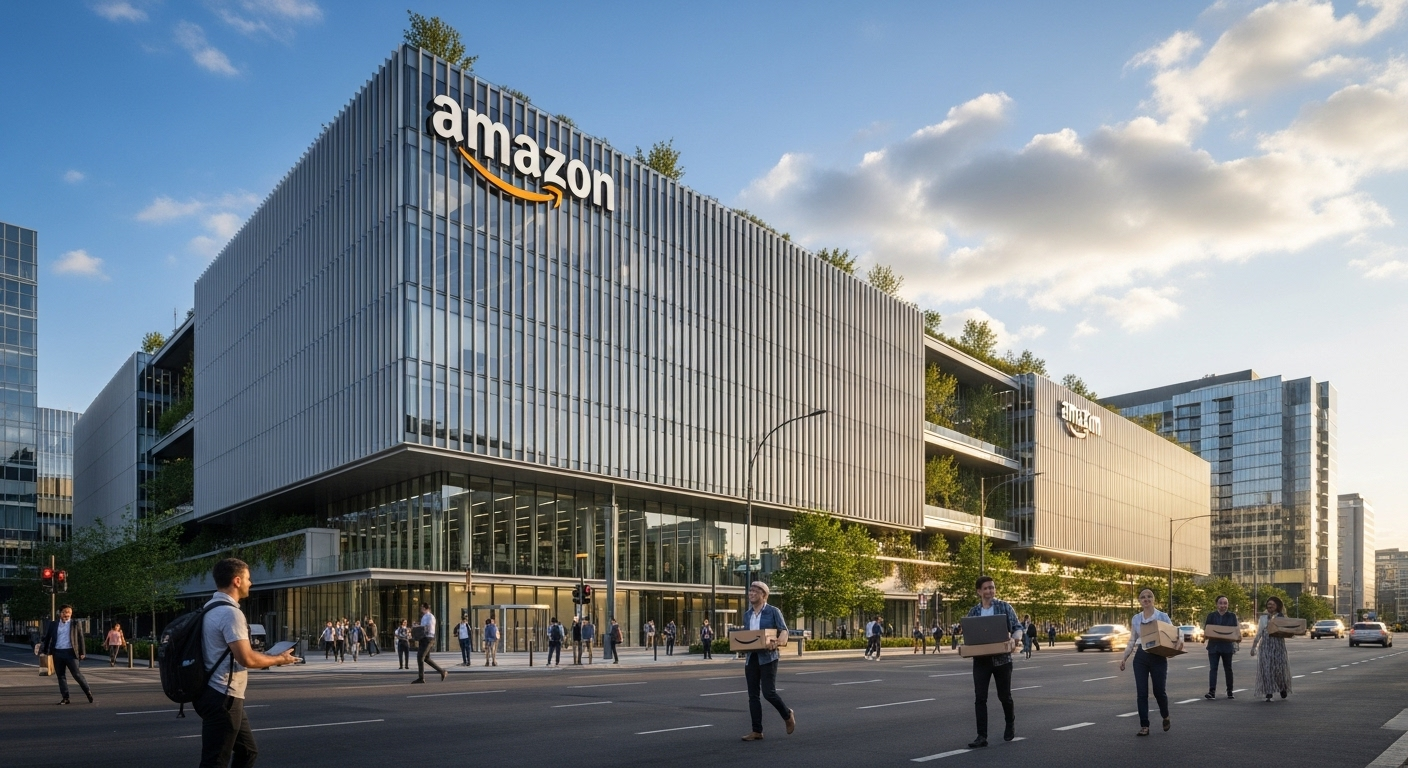
Jeff Bezos Amazon success is one of the most powerful stories in modern business history. Jeff Bezos founded Amazon as a small online bookstore, but today it is a global leader in e-commerce, cloud computing, and digital services. Amazon’s dominance comes from its ability to grow across industries while maintaining strong customer trust worldwide. What makes Amazon unique is that it focused on long-term growth instead of quick profits.
Bezos built the company around two core principles: customer obsession and long-term financial thinking. By putting customers first and reinvesting profits into future growth, Amazon created a sustainable and scalable business model that continues to shape the global economy.
Jeff Bezos’ Early Vision for Amazon
Jeff Bezos’ early vision for Amazon was simple but powerful. In 1994, Bezos founded Amazon as an online bookstore because books were easy to ship and had a huge global demand. At that time, the internet was still new, and very few people believed online shopping could become mainstream. Bezos saw something others did not. He noticed that internet usage was growing rapidly every year, and he believed this growth would continue for decades. This belief pushed him to leave a stable job and take a big risk by starting Amazon.
Bezos did not see Amazon as just a bookstore. From the beginning, he imagined it as a “store for everything.” Books were only the first step. His long-term goal was to build a large online platform that could sell many products and serve millions of customers worldwide. This vision guided every early decision, from website design to customer service. Bezos focused on building strong systems instead of chasing quick profits.
One of the most important parts of Bezos’ vision was his willingness to delay profits for future scale. In the early years, Amazon invested heavily in technology, warehouses, and logistics. Many investors criticized the company for not making profits fast enough. However, Bezos believed that growth, customer trust, and market leadership were more important than short-term earnings. He often told shareholders that Amazon was playing a long game.
Understanding Customer Obsession

Customer obsession is one of the most important ideas behind Amazon’s success. Jeff Bezos often explained that customer obsession is very different from competitor focus. Many companies spend most of their time watching competitors, copying strategies, and reacting to market trends. Amazon chose a different approach. Instead of worrying about competitors, it focused deeply on customer needs, problems, and expectations.
Amazon’s philosophy of putting customers first means every decision starts with the customer. Bezos believed that customers are always changing, always wanting better prices, faster delivery, and improved service. Competitors may come and go, but customer needs remain constant. By listening closely to customers, Amazon could innovate continuously and stay ahead without directly chasing rivals.
This customer-first mindset influenced Amazon’s pricing, website design, and policies. Amazon often lowered prices even when it reduced short-term profits. It simplified the buying process to make shopping easy and fast. The company invested in customer service systems that solved problems quickly. These decisions were not always the most profitable in the short term, but they created strong customer loyalty.
Customer trust plays a major role in repeat business. When customers trust a brand, they return again and again. Amazon built trust by delivering orders on time, handling returns smoothly, and protecting customer data. Over time, this trust turned into habit. Customers automatically choose Amazon because they know what to expect. This repeat behavior reduced marketing costs and increased lifetime customer value.
Customer-Centric Innovations at Amazon

Amazon’s customer-centric innovations are a direct result of Jeff Bezos’ focus on customer obsession. One of the most impactful innovations was fast shipping. Amazon invested heavily in warehouses, fulfillment centers, and logistics networks to reduce delivery times. This effort led to the creation of Amazon Prime, a membership program offering fast and free shipping. Prime changed customer expectations across the entire retail industry.
Amazon Prime did more than improve shipping. It created a loyal customer base willing to pay a yearly fee for convenience and value. Prime members shop more frequently and spend more on Amazon than non-members. This program strengthened customer relationships while supporting Amazon’s long-term financial goals.
Another key innovation is Amazon’s easy returns and customer support systems. Amazon made returns simple, often allowing customers to return products with minimal questions. While this policy increased costs, it reduced customer anxiety and encouraged more purchases. Customers felt safe buying online because they knew problems would be resolved quickly.
Amazon also uses data and personalization to improve the customer experience. The company analyzes browsing behavior, purchase history, and preferences to recommend products. Personalized suggestions save customers time and make shopping more enjoyable. These systems improve sales while making customers feel understood.
Every innovation at Amazon starts with one question: how does this improve the customer experience? Whether it is faster delivery, better support, or smarter recommendations, Amazon’s customer-centric approach keeps users satisfied. These innovations not only increased convenience but also built long-term loyalty. By continuously improving how customers interact with the platform, Amazon strengthened its position as a trusted and preferred marketplace.
Long-Term Financial Thinking Explained
Long-term financial thinking is a core principle behind Jeff Bezos’ leadership at Amazon. Unlike many companies that focus on quarterly profits, Bezos prioritized long-term value creation. He believed that short-term sacrifices could lead to massive long-term rewards. This mindset shaped Amazon’s financial strategy from the beginning.
Bezos often chose growth over immediate profitability. Amazon reinvested earnings into technology, infrastructure, and innovation instead of distributing profits early. This approach allowed the company to build strong systems that could support massive scale. Warehouses, cloud computing services, and automation required large investments, but they created long-term competitive advantages.
Reinvesting earnings into growth helped Amazon enter new industries. Amazon Web Services, for example, started as an internal tool but became a major profit engine over time. This success was possible because Bezos was willing to invest patiently without expecting quick returns. Many companies would have abandoned such projects too early.
Long-term financial thinking also helped Amazon survive market downturns. Because the company focused on cash flow and scalability, it could adapt during economic challenges. Investors who understood Bezos’ vision supported the strategy, allowing Amazon to continue expanding.
Financial Strategies That Powered Amazon’s Growth
Amazon’s growth was driven by strong financial strategies that focused on the long term rather than quick wins. One of the most important strategies was aggressive reinvestment into infrastructure and technology. Instead of saving profits or paying high dividends, Jeff Bezos chose to put money back into the business. Amazon invested heavily in warehouses, delivery systems, cloud technology, and software development. These investments increased costs in the short term, but they created a strong foundation for future growth.
Scaling logistics, warehouses, and fulfillment networks was another key strategy. Amazon built a massive global network of fulfillment centers located close to customers. This reduced delivery time and shipping costs over time. The company also invested in robotics, automation, and advanced inventory systems to handle millions of orders efficiently. By controlling its own logistics, Amazon reduced dependence on third-party services and improved reliability. This scale made it difficult for competitors to match Amazon’s speed and efficiency.
Strategic pricing and thin margins were also central to Amazon’s financial approach. Amazon often sold products at very low margins or even at a loss. The goal was not immediate profit but market leadership. Lower prices attracted more customers, increased order volume, and strengthened customer loyalty. As more people used Amazon, the company gained valuable data and bargaining power with suppliers. Over time, this scale reduced costs and improved profitability.
Amazon Web Services (AWS): A Long-Term Bet
Amazon Web Services, known as AWS, was one of Jeff Bezos’ boldest and most visionary decisions. When AWS was launched, many people saw it as a risky move. Amazon was mainly known as an online retailer, not a technology service provider. Investing heavily in cloud computing required large upfront costs, technical expertise, and long-term commitment. At the time, the market for cloud services was uncertain, and returns were not guaranteed.
Despite the risks, Bezos believed that businesses would increasingly need flexible and affordable computing power. Amazon had already built strong internal systems to manage its online operations. Bezos saw an opportunity to offer this infrastructure to other companies. AWS allowed businesses to rent computing resources instead of building their own data centers. This idea was new and disruptive.
Over time, AWS became a major profit engine for Amazon. Unlike retail, which operates on thin margins, AWS generates high profits. It serves startups, large companies, and governments around the world. AWS provides stable and recurring revenue, which helped balance Amazon’s lower-margin retail business. As AWS grew, it became one of the most profitable cloud platforms globally.
Scaling Businesses Through Systems and Automation
Scaling Amazon to serve millions of customers required strong systems and automation. Jeff Bezos understood that people alone could not manage a business of this size efficiently. Technology played a key role in controlling costs and maintaining quality. Amazon invested heavily in automated warehouses, data systems, and software tools that reduced manual work and errors.
The role of technology and automation in cost control is central to Amazon’s model. Robots in fulfillment centers speed up order processing and reduce labor costs. Automated inventory systems track products in real time, minimizing waste and shortages. Advanced algorithms manage pricing, demand forecasting, and supply chains. These systems help Amazon operate at lower costs compared to traditional retailers.
Operational efficiency became a major financial advantage. Because Amazon could process and deliver orders faster and cheaper, it could offer lower prices to customers. This efficiency also allowed Amazon to handle peak demand during events like sales seasons without major disruptions. As the business grew, the systems scaled smoothly without needing equal increases in staff or expenses.
Leadership Principles Behind Amazon’s Culture

Amazon’s culture is deeply shaped by Jeff Bezos’ leadership principles. Bezos is known for his data-driven decision-making and high expectations. He encouraged leaders to think independently, take ownership, and make bold decisions. His leadership style balanced creativity with discipline, allowing innovation while maintaining strong standards.
One important principle is the focus on high standards. Bezos believed that high standards are contagious and essential for long-term success. Employees are encouraged to deliver quality work and continuously improve. Ownership is another key value. Leaders at Amazon are expected to act like owners, making decisions that benefit the company in the long run rather than focusing on short-term results.
Encouraging innovation while managing risk is also central to Amazon’s culture. Bezos supported experimentation and accepted failure as part of learning. Teams are encouraged to test new ideas, even if some fail. However, Amazon manages risk by using data, small-scale testing, and clear accountability. This approach allows innovation without losing control.
Conclusion
Jeff Bezos’ secret to Amazon’s success is built on customer obsession and long-term financial thinking. Jeff Bezos’ early vision for Amazon focused on serving customers first, not chasing quick profits. By understanding customer obsession, Amazon created customer-centric innovations like fast delivery, low prices, and easy shopping. Long-term financial thinking explained Amazon’s habit of reinvesting profits to fuel growth. Strong financial strategies powered Amazon’s expansion, while AWS proved to be a smart long-term bet. By scaling businesses through systems and automation and following clear leadership principles, Amazon built a strong culture. Together, these ideas helped Amazon grow into a global business leader.
FAQs
How did Jeff Bezos manage risk while growing Amazon?
Jeff Bezos managed risk by taking small, controlled experiments instead of betting everything at once. He encouraged testing ideas on a limited scale before expanding them globally. Jeff Bezos believed that failure was acceptable if lessons were learned quickly. This approach reduced major losses while allowing innovation. By using data and customer feedback, Jeff Bezos made informed decisions that balanced creativity with financial discipline and long-term stability.
What leadership habits made Jeff Bezos successful?
Jeff Bezos developed strong leadership habits such as clear thinking, long-term planning, and strong communication. He focused on written plans instead of long meetings to improve decision quality. Jeff Bezos also encouraged leaders to take ownership and act like company owners. These habits helped teams stay focused, responsible, and aligned with Amazon’s goals while supporting fast but thoughtful decision-making.
How did Jeff Bezos influence modern entrepreneurship?
Jeff Bezos influenced modern entrepreneurship by proving that patience and long-term thinking can outperform quick-profit models. Many startups now follow his example by focusing on customer experience, reinvesting profits, and scaling slowly but steadily. Jeff Bezos showed that building strong systems and trust can create lasting businesses. His success inspired entrepreneurs to think bigger and plan for decades, not just years.
Why is Jeff Bezos considered a visionary leader?
Jeff Bezos is considered a visionary leader because he saw opportunities before they became obvious. He believed in e-commerce, cloud computing, and automation long before they became mainstream. Jeff Bezos focused on future customer needs rather than current trends. His ability to think long term and invest early helped Amazon lead multiple industries and stay ahead of competitors.
What can small businesses learn from Jeff Bezos?
Small businesses can learn from Jeff Bezos by focusing on customers and thinking beyond short-term profits. Jeff Bezos proved that trust, consistency, and reinvestment are key to growth. Even with limited resources, businesses can improve service, listen to feedback, and build efficient systems. These principles help create loyal customers and sustainable success over time.