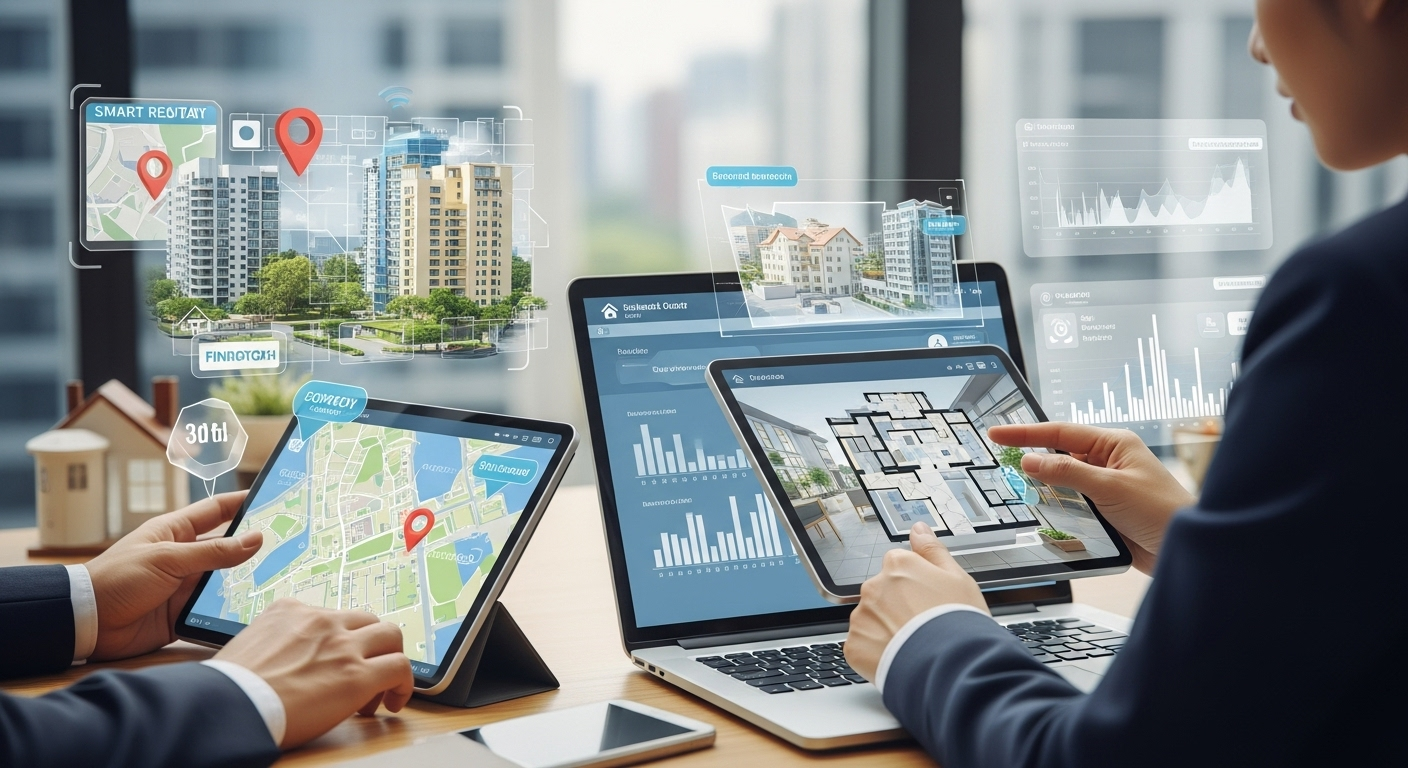
Real estate technology trends are transforming how properties are bought, sold, managed, and invested in as the industry moves into 2026. Digital tools, automation, and data-driven systems are replacing traditional processes, making the property market faster and more efficient. From AI-powered pricing to smart homes, technology is helping buyers, sellers, and investors make better decisions with less effort and more transparency.
As real estate technology trends continue to evolve, professionals who adapt early gain a strong competitive advantage. In 2026, innovations like virtual tours, blockchain transactions, and smart property management tools are shaping a more connected, secure, and sustainable property market for everyone involved.
Artificial Intelligence in Real Estate

Real estate technology trends in 2026 are strongly driven by artificial intelligence, which is changing how decisions are made across the property market. One major development is AI-powered property valuation models. These tools analyze large amounts of data such as past sales, location, property size, amenities, and market conditions to estimate property values more accurately. Compared to traditional methods, AI valuations are faster, reduce human bias, and help buyers and sellers agree on fair prices. This makes transactions smoother and builds trust in digital platforms.
Another important part of real estate technology trends is predictive analytics for pricing and demand. AI systems can study historical data and current market signals to predict future price movements and demand levels. Investors use these insights to identify the best time to buy or sell properties. Developers can also plan projects based on expected demand in specific areas. Predictive analytics lowers risk and helps businesses make smarter, long-term decisions in a competitive market.
AI chatbots for real estate customer support are also becoming common. These chatbots answer buyer and tenant questions instantly, schedule property viewings, and provide details about listings at any time of day. For real estate agencies, this reduces workload and improves response time. Customers benefit from faster service and better access to information. As part of modern real estate technology trends, AI chatbots improve both efficiency and customer satisfaction.
Smart Homes and IoT Integration
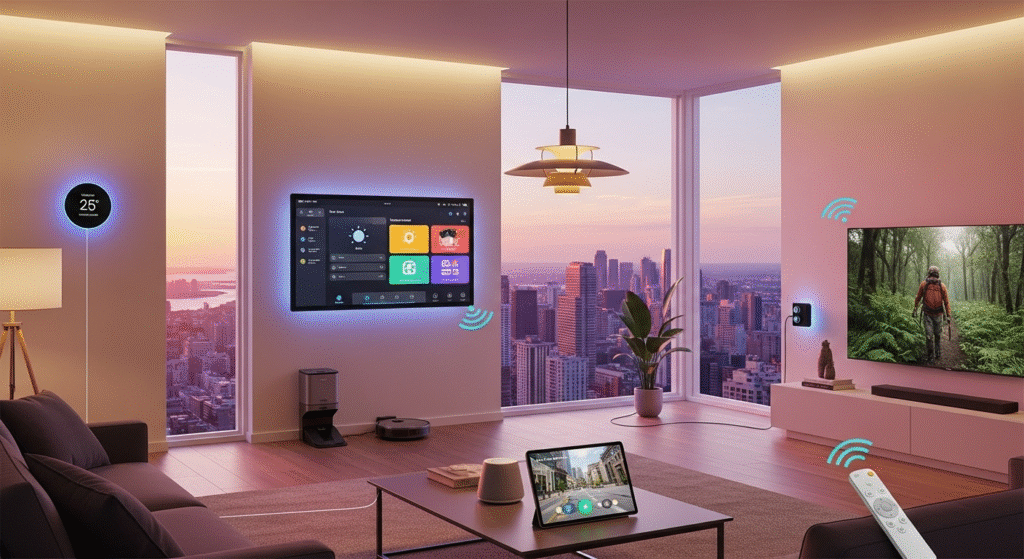
Real estate technology trends in 2026 are also shaped by the rapid growth of smart homes and Internet of Things (IoT) integration. Smart home automation includes connected devices such as smart lighting, thermostats, security systems, and voice-controlled assistants. These technologies improve comfort, safety, and convenience for homeowners and tenants, making properties more attractive.
The demand for energy-efficient and connected properties is rising as buyers become more environmentally conscious. Smart energy systems help monitor and reduce electricity and water usage, lowering utility bills. As sustainability becomes a priority, these features are becoming a key part of real estate technology trends and influencing purchasing decisions.
Smart homes also have a strong impact on property value and buyer demand. Properties with modern smart features often sell faster and at higher prices than traditional homes. Buyers see them as future-ready investments that offer long-term savings and better living experiences. For landlords, smart devices help manage properties remotely and reduce maintenance costs.
Virtual Reality (VR) and Augmented Reality (AR)

Real estate technology trends in 2026 are being transformed by Virtual Reality (VR) and Augmented Reality (AR), making property buying and selling more interactive and efficient. One of the biggest changes is the rise of virtual property tours and walkthroughs. VR allows buyers to explore homes, apartments, and commercial spaces from anywhere in the world. This is especially helpful for international buyers and busy investors. Virtual tours save time, reduce unnecessary site visits, and help buyers shortlist properties faster.
Another major part of real estate technology trends is the use of AR tools for interior design visualization. AR allows users to see how furniture, wall colors, and layouts will look inside a real space using their smartphone or tablet. Buyers can imagine living in the property before purchasing, while sellers can stage homes digitally without physical furniture. This improves buyer confidence and emotional connection with the property.
VR and AR are also reducing time and cost in property sales. Real estate agents can handle more clients without scheduling multiple in-person visits. Developers can market properties even before construction is complete using virtual models. These real estate technology trends lower marketing expenses and speed up decision-making. As technology becomes more affordable, VR and AR tools will become standard in property listings, helping the market move faster and smarter.
Blockchain and Digital Transactions
Real estate technology trends are also being reshaped by blockchain technology, which improves security and transparency in property transactions. One key use is secure property records and smart contracts. Blockchain stores ownership records digitally, making them tamper-proof and easy to verify. Smart contracts automatically execute agreements when conditions are met, reducing paperwork and legal delays.
Another important change driven by real estate technology trends is faster and transparent real estate transactions. Traditional property deals involve many intermediaries and long approval times. Blockchain reduces these steps by providing a shared and trusted system. Buyers and sellers can track transactions in real time, lowering the risk of fraud and errors.
Tokenization of real estate assets is another innovation. Properties can be divided into digital tokens, allowing multiple investors to own small shares. This makes real estate investment more accessible and liquid. In 2026, blockchain-based real estate technology trends are helping create a more open, efficient, and global property market.
Property Management Technology
Real estate technology trends in property management focus on automation, efficiency, and remote control. One major advancement is automated rent collection and maintenance tracking. Digital platforms allow tenants to pay rent online and report issues instantly. Property managers can track repairs, expenses, and schedules in one system, reducing manual work.
AI-driven tenant communication tools are also becoming popular. These tools answer tenant questions, send reminders, and handle routine requests automatically. This improves response time and tenant satisfaction while reducing workload for managers. Examples of tools used in property management technology include AppFolio, Buildium, Propertyware, and Rentec Direct.
Lastly, remote property management solutions allow landlords to manage properties from anywhere. Smart locks, cameras, and dashboards provide real-time updates. These real estate technology trends make property management more scalable, cost-effective, and suitable for modern investors managing multiple properties across different locations.
Real Estate FinTech Solutions
Real estate technology trends in 2026 are strongly influenced by FinTech solutions that simplify property financing and lending. One major development is the rise of digital mortgage platforms. These platforms allow buyers to apply for mortgages online, upload documents digitally, and track application status in real time. Compared to traditional methods, digital mortgages reduce paperwork, save time, and improve transparency. Buyers enjoy a smoother experience, while lenders reduce processing costs and errors.
Another important part of real estate technology trends is online property financing and lending tools. These tools connect buyers, lenders, and investors through digital platforms. Users can compare loan options, interest rates, and repayment terms easily. Small developers and investors also benefit from alternative financing options such as peer-to-peer lending and crowdfunding. These innovations make financing more accessible and flexible for a wider audience.
Faster loan approvals through technology are transforming the property market. AI and data analytics assess credit risk quickly by analyzing financial history, income, and market data. This reduces approval times from weeks to days or even hours. Faster approvals help buyers close deals quickly and give sellers more confidence. In 2026, FinTech-driven real estate technology trends are making property transactions faster, more inclusive, and less stressful for all parties involved.
Sustainable and Green Real Estate Technology
Real estate technology trends are increasingly focused on sustainability as buyers and governments prioritize environmental responsibility. One key area is technology supporting energy-efficient buildings. Smart insulation, advanced materials, and automated climate control systems reduce energy consumption and lower utility costs. Developers use these technologies to meet green building standards and attract eco-conscious buyers.
Another major trend is the adoption of smart energy management systems. These systems monitor electricity, water, and heating usage in real time. Property owners can identify waste, optimize consumption, and reduce carbon footprints. Smart meters and solar integration tools also help buildings use renewable energy more efficiently. As part of real estate technology trends, these systems improve long-term cost savings and sustainability.
The growing demand for sustainable properties is shaping the market. Buyers are willing to pay more for homes with green features because they offer lower running costs and healthier living environments. Investors also prefer sustainable properties due to long-term value and regulatory support. In 2026, green-focused real estate technology trends are no longer optional but essential for future-ready property development.
Cybersecurity and Data Privacy in Real Estate
Real estate technology trends in 2026 place strong emphasis on cybersecurity and data privacy as digital platforms handle sensitive information. One major concern is protecting buyer and tenant data. Personal details, financial records, and legal documents are stored online, making them targets for cyberattacks. Secure systems with encryption and access controls are essential to prevent data breaches.
Another critical area is the use of secure platforms for real estate professionals. Agents, brokers, and property managers rely on digital tools for listings, contracts, and communication. Secure platforms protect transactions and build trust with clients. Multi-factor authentication and regular security updates are becoming standard features within real estate technology trends.
Lastly, compliance with data protection regulations is crucial. Laws require companies to handle data responsibly and transparently. Real estate businesses must follow these rules to avoid fines and reputational damage. In 2026, cybersecurity-focused real estate technology trends ensure safer digital transactions and long-term trust in the property market.
Conclusion
Real estate technology trends in 2026 are reshaping the property market through innovation, efficiency, and digital transformation. Technologies like AI, big data, VR, blockchain, FinTech, and smart property management are making buying, selling, and managing real estate faster and more transparent. Sustainable and green solutions are increasing property value while meeting environmental goals. At the same time, cybersecurity and data privacy are becoming critical to protect sensitive information. These real estate technology trends help buyers, investors, and professionals make smarter decisions with lower risk. As technology continues to evolve, those who adapt early will gain a strong advantage in a more connected, secure, and future-ready property market.
FAQs
How do real estate technology trends affect small real estate agencies?
Real estate technology trends help small agencies compete with larger firms by improving efficiency and reducing costs. Digital tools automate tasks like listings, communication, and document management. This allows small teams to serve more clients without hiring extra staff. Technology also improves marketing reach and customer experience, helping smaller agencies grow faster and operate more professionally in a competitive property market.
Is real estate technology expensive to adopt?
Many real estate technology tools are affordable and scalable. Cloud-based platforms often offer monthly subscriptions, allowing businesses to start small and upgrade as needed. Free trials and entry-level plans reduce financial risk. Over time, technology often saves money by reducing manual work, errors, and delays. This makes adopting real estate technology a smart long-term investment rather than a costly expense.
Can real estate technology replace human agents?
Real estate technology supports agents but does not fully replace them. While tools automate data analysis and communication, human judgment, negotiation skills, and relationship-building remain essential. Technology helps agents work faster and smarter, allowing them to focus on client needs. The best results come from combining digital tools with personal expertise, not replacing human involvement entirely.
How does technology improve transparency in property transactions?
Technology improves transparency by providing real-time access to data, documents, and transaction status. Digital platforms allow buyers and sellers to track progress, verify records, and reduce misunderstandings. Tools like online dashboards and automated updates increase trust among all parties. This transparency reduces disputes, speeds up deals, and creates a smoother experience for everyone involved.
What skills are important for professionals using real estate technology?
Professionals should understand basic digital tools, data interpretation, and online communication platforms. Being open to learning new software and adapting workflows is essential. Cybersecurity awareness is also important to protect client data. Strong problem-solving skills combined with technology knowledge help real estate professionals stay competitive as digital transformation continues in the property industry.