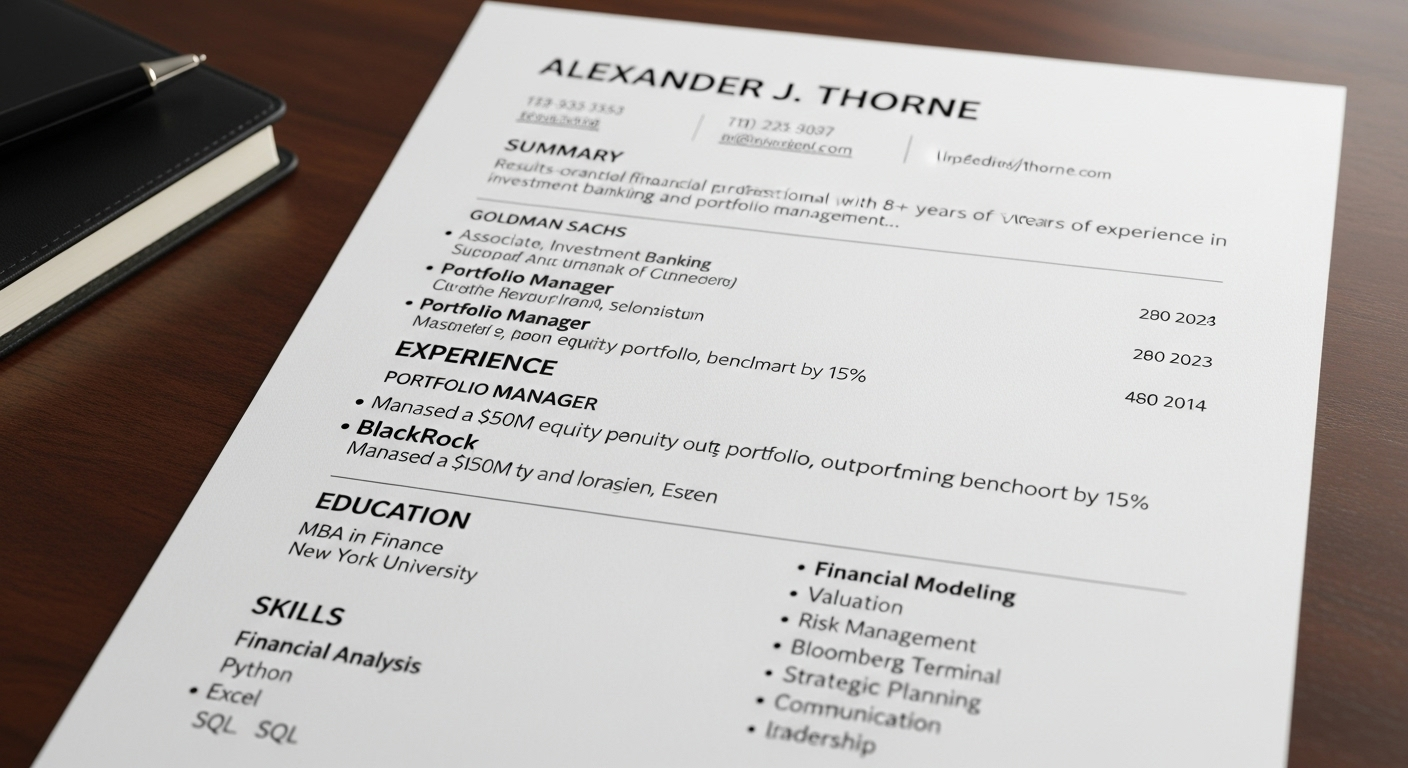
Finance resume is a crucial tool for job seekers looking to build a successful career in banking, investment, or financial services. A well-crafted resume highlights your skills, experience, and achievements, helping you stand out in a competitive job market. It serves as your first impression with recruiters and hiring managers, so making it clear, concise, and targeted is essential.
In this guide, we will share expert finance resume tips to help you create a compelling resume that attracts attention. From structuring your work experience to showcasing relevant skills, this guide provides actionable advice for candidates at all career levels.
Structuring Your Finance Resume
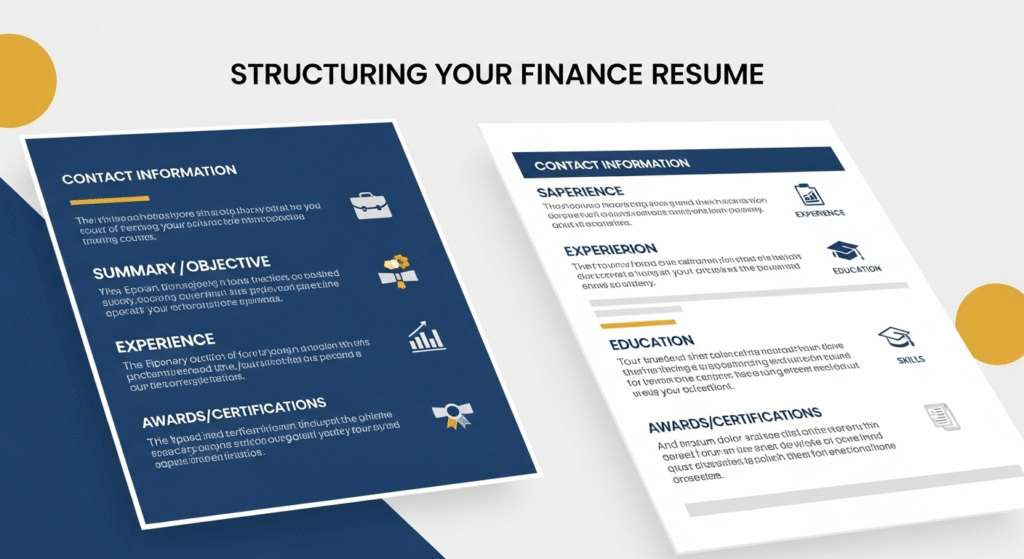
A well-structured finance resume is the foundation of a strong job application. Choosing the right resume format is crucial. The chronological format is ideal for professionals with consistent work experience, highlighting career growth and achievements over time. The functional format focuses on skills and expertise, which works well for career changers or those with gaps in employment. A hybrid format combines both, emphasizing skills while maintaining a clear timeline of professional experience. Selecting the right format ensures your resume presents your qualifications effectively to recruiters.
Key sections are essential for a complete finance resume. Start with clear contact information, including name, phone number, email, and LinkedIn profile. The summary section should provide a snapshot of your expertise and achievements. Include a skills section highlighting technical and soft skills relevant to banking, accounting, or investment roles. Work experience should focus on measurable accomplishments using action verbs, and education should list degrees, certifications, and relevant coursework. Proper sectioning helps recruiters quickly scan your resume and identify your qualifications.
Readability and professional layout are also critical for a finance resume. Use clean fonts, consistent spacing, and bullet points for easy scanning. Avoid excessive graphics or complex formatting that can distract from content or confuse Applicant Tracking Systems (ATS). Maintain concise language and prioritize the most relevant information. A well-structured resume not only looks professional but also makes it easier for hiring managers to evaluate your experience, skills, and potential fit for finance roles. Proper structure ensures your finance resume stands out in a competitive market.
Crafting a Strong Resume Summary

The summary section of a finance resume is your first opportunity to capture a recruiter’s attention. It should be concise, clear, and compelling, providing a quick overview of your experience, skills, and achievements. A well-written summary highlights your expertise in finance, such as banking, accounting, investment management, or corporate finance, and demonstrates why you are a strong candidate for the role. Think of it as your elevator pitch on paper, summarizing your professional value in just a few sentences.
To craft a strong finance resume summary, focus on key achievements and relevant experience. Mention measurable results like increasing revenue, managing large budgets, reducing costs, or implementing successful financial strategies. Including specific numbers or percentages can make your summary more impactful. For example, stating that you improved reporting accuracy by 25% adds credibility and shows tangible accomplishments. Recruiters look for results-oriented candidates, so highlighting achievements in the summary section sets your resume apart.
Tailoring the summary for different finance roles is essential. A banking role may emphasize client relationship management and loan processing experience, while an accounting role focuses on auditing, compliance, or tax preparation skills. Investment-focused positions might highlight portfolio management, financial modeling, or market analysis experience. Adapting your summary ensures that your finance resume speaks directly to the needs of the hiring organization and demonstrates that you are well-suited for the specific role.
Highlighting Relevant Skills
Skills are a critical part of a finance resume, as they showcase your abilities and make your application stand out. Core skills vary depending on the role but often include financial analysis, accounting, budgeting, investment management, risk assessment, and regulatory compliance. Including these skills helps demonstrate your competence and relevance for banking, accounting, or corporate finance positions. Clearly listing skills allows recruiters to quickly assess whether you match the technical requirements of the job.
In addition to technical skills, soft skills are equally important on a finance resume. Skills like problem-solving, communication, teamwork, attention to detail, and time management are essential in finance roles. Highlighting both technical and soft skills ensures a well-rounded representation of your qualifications. Employers often seek candidates who can not only handle numbers but also communicate effectively and collaborate with teams to achieve business goals.
Using keywords from job descriptions is another crucial strategy. Many companies use Applicant Tracking Systems (ATS) to scan resumes for specific terms. Incorporating relevant keywords from the job posting into your finance resume increases the chances of passing these automated filters. For example, if a posting mentions “financial reporting,” “budget analysis,” or “portfolio management,” ensure these terms appear naturally in your skills section or experience descriptions. Highlighting the right skills makes your resume more targeted, effective, and likely to attract recruiter attention.
Showcasing Work Experience Effectively
A well-presented finance resume emphasizes measurable achievements and results, rather than just listing job responsibilities. Recruiters look for candidates who have made a tangible impact, so highlighting accomplishments is key. For example, instead of stating “managed budgets,” write “managed a $2 million departmental budget, reducing expenses by 10% annually.” Quantifiable results demonstrate your skills and value, making your work experience section compelling and credible.
Using action verbs and finance-specific terminology further strengthens a finance resume. Words like “analyzed,” “optimized,” “reconciled,” “forecasted,” and “audited” clearly communicate your expertise. Tailoring terminology to the job description ensures that your resume aligns with the role and resonates with recruiters. Including industry-specific phrases also helps pass Applicant Tracking Systems (ATS) that scan for keywords, improving the chances of your resume being noticed.
Structuring experience for maximum impact is another essential element. List roles in reverse chronological order, starting with the most recent position. Use bullet points to separate each achievement and begin each point with an action verb. Focus on relevant experiences that match the job requirements. Avoid unnecessary details or unrelated tasks that do not showcase your skills. By organizing your work experience clearly and emphasizing measurable results, your finance resume stands out as professional, targeted, and results-driven.
A strong experience section communicates your career progression, expertise, and potential value to the employer. Highlighting measurable achievements, using precise terminology, and structuring content effectively ensures your finance resume leaves a lasting impression and improves your chances of securing interviews.
Emphasizing Education and Certifications
Education and certifications play a critical role in a strong finance resume, especially for positions in banking, accounting, investment, or corporate finance. Employers often look for finance-related degrees, such as a Bachelor’s or Master’s in Finance, Accounting, Economics, or Business Administration. Certifications like CPA, CFA, ACCA, or FRM can significantly enhance your profile and demonstrate specialized knowledge, making you more competitive in the job market.
When presenting your education, include relevant coursework or projects that align with the role. For example, courses in financial modeling, investment analysis, or auditing add depth to your finance resume. Highlight academic achievements such as honors, scholarships, or high GPA, which reflect dedication and competence. Including certifications in a separate section ensures they are clearly visible to recruiters and showcase your commitment to professional development.
Continuous learning and professional development are also important. Attending workshops, webinars, or completing online finance courses demonstrates initiative and keeps your skills up-to-date. Listing these activities in your finance resume shows that you are proactive and serious about advancing your career. Employers value candidates who maintain industry knowledge and strive for improvement.
By emphasizing relevant degrees, certifications, and ongoing learning, your finance resume effectively communicates qualifications and expertise. This combination of formal education and professional development reassures recruiters that you are capable, qualified, and prepared to excel in finance roles.
Optimizing for ATS (Applicant Tracking Systems)

Optimizing your finance resume for ATS is crucial because many companies use these systems to filter candidates before a human recruiter reviews applications. ATS scans for specific keywords, so including relevant terms from the job description increases the chances of your resume being selected. Focus on technical skills, finance terminology, certifications, and action verbs that match the position.
Avoid formatting issues that may hinder ATS scanning. Use standard fonts, clear headings, and simple bullet points. Avoid tables, graphics, or unusual layouts, as ATS may misread them. Save your resume in a compatible format, usually PDF or DOCX, to ensure proper parsing. A clean, organized layout makes it easier for both ATS and recruiters to read your finance resume.
Tips for making your resume ATS-friendly include using exact job titles, repeating key skills naturally throughout the resume, and placing important keywords in work experience, skills, and summary sections. Also, avoid abbreviations that may not match the ATS search terms. Regularly updating your resume to match the specific role ensures it passes ATS checks effectively.
An ATS-optimized finance resume increases the likelihood of reaching a recruiter and ultimately securing an interview. By strategically including keywords, maintaining clean formatting, and aligning your content with the job description, your resume becomes both machine-readable and recruiter-friendly, improving your chances in a competitive finance job market.
Conclusion
A well-crafted finance resume is key to securing roles in banking, investment, and corporate finance. By focusing on clear structure, a strong summary, relevant skills, measurable achievements, education, certifications, and ATS optimization, candidates can create resumes that stand out to recruiters. Attention to detail, readability, and alignment with job requirements increases the chances of landing interviews. Regular updates and tailoring the resume for specific positions further improve success. A professional, targeted finance resume effectively showcases your expertise, achievements, and potential value, making it a powerful tool for advancing your finance career.
FAQs
How long should a finance resume be?
A finance resume should generally be one to two pages long. For early-career professionals, one page is sufficient, focusing on education, skills, and relevant experience. Experienced professionals may use two pages to include measurable achievements, certifications, and detailed work experience. The key is to keep content concise, relevant, and well-organized. Avoid unnecessary information, and prioritize accomplishments that demonstrate skills, results, and value to potential employers.
How can I tailor my finance resume for different roles?
To tailor a finance resume, analyze the job description and identify key skills, qualifications, and responsibilities. Highlight experiences and achievements that match the specific role, whether it’s banking, accounting, or investment. Adjust your summary, skills section, and work experience to reflect relevant expertise. Use industry-specific terminology and keywords from the posting. Tailoring ensures your finance resume aligns with recruiter expectations and increases the chance of passing automated screening tools and catching attention in competitive job markets.
Are certifications necessary on a finance resume?
Certifications enhance a finance resume but may not always be mandatory. Credentials like CPA, CFA, or ACCA demonstrate specialized knowledge, credibility, and commitment to professional growth. Including certifications is particularly valuable for positions requiring technical expertise or regulatory compliance. They can set you apart from other candidates, especially in competitive fields like investment banking or auditing. Highlighting certifications in a dedicated section ensures they are visible and boosts the overall strength of your finance resume.