
Global Financial Risk affects investors and businesses across the world, no matter their size or experience. Changes in interest rates, inflation, economic growth, and political events can quickly impact markets, profits, and long-term plans. Understanding these risks helps investors protect their money and helps businesses make smarter financial decisions in uncertain times.
In this guide, we explain the most important global financial risks in a simple and clear way. You will learn how these risks influence investments, operations, and future growth.
Economic Slowdown and Recession Risk
Economic slowdown and recession are major forms of global financial risk that affect countries, businesses, and investors at the same time. A slowdown happens when economic growth weakens over time, while a recession means economic activity falls for several months. These situations reduce spending, lower profits, and increase uncertainty in financial markets. Understanding this global financial risk helps investors and businesses prepare for tough periods.
There are several signs of a global economic slowdown. Falling GDP growth, rising unemployment, weak consumer spending, and lower industrial production are common signals. When businesses sell fewer goods and services, they delay expansion plans and reduce hiring. Stock markets may become unstable, and investor confidence often declines. These warning signs show how global financial risk spreads across borders and industries.
Recessions strongly impact investments and business revenues. Stock prices usually fall as company earnings decline. Real estate values may drop, and access to credit becomes tighter. Small and medium businesses often face cash flow problems because customers spend less. For investors, returns may shrink, and losses become more likely. This makes recession-related global financial risk especially dangerous for those without diversified portfolios.
Some sectors are more vulnerable during economic contractions. Retail, travel, construction, and manufacturing often suffer the most because they depend on consumer demand. Luxury goods and non-essential services see sharp declines in sales. In contrast, essential sectors like healthcare and utilities tend to perform better. Knowing which industries are exposed helps reduce global financial risk through smarter investment choices.
Inflation and Interest Rate Volatility
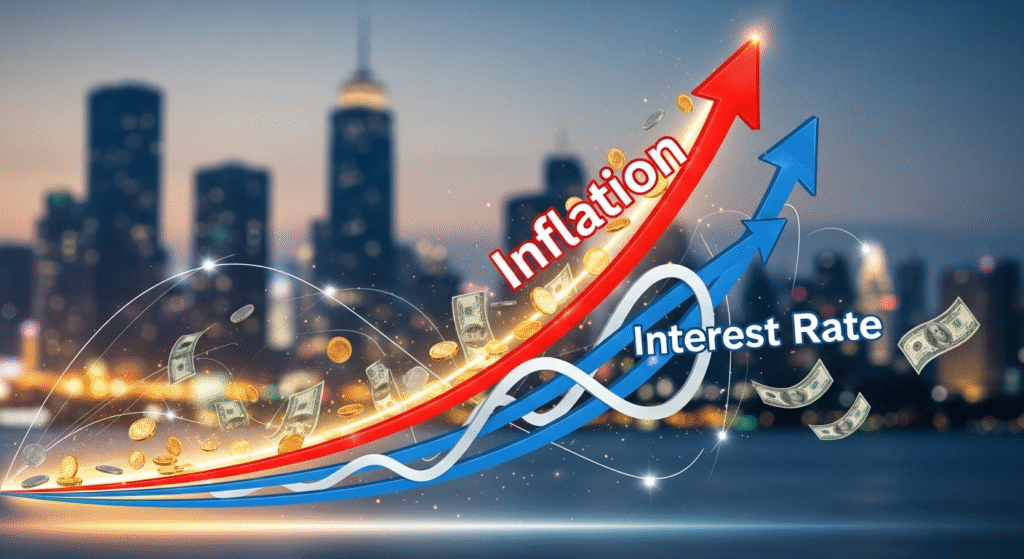
Inflation and interest rate volatility are important forms of global financial risk that directly affect savings, investments, and business profits. Inflation happens when prices rise over time, reducing the value of money. Interest rate changes, usually controlled by central banks, influence borrowing, spending, and investment decisions. Together, these factors create uncertainty across global markets and increase global financial risk.
Rising inflation worldwide is caused by several factors. Supply chain disruptions, higher energy prices, labor shortages, and increased government spending all push prices upward. When demand grows faster than supply, inflation accelerates. For businesses, this means higher costs for raw materials and wages. For consumers, daily expenses become more expensive, increasing the impact of global financial risk on household budgets.
Central banks respond to inflation by adjusting interest rates. When inflation is high, central banks raise rates to slow spending and borrowing. Higher interest rates make loans more expensive for businesses and consumers. This can reduce business expansion, lower housing demand, and slow economic growth. Sudden rate changes can shock financial markets, adding to global financial risk for investors and companies.
Inflation erodes purchasing power and profit margins over time. Consumers can buy fewer goods with the same income, which lowers demand. Businesses face shrinking profit margins if they cannot pass higher costs to customers. Fixed-income investments lose value as inflation rises, making this global financial risk especially harmful for conservative investors.
Geopolitical and Political Instability
Geopolitical and political instability is a growing source of global financial risk in today’s interconnected world. Wars, trade conflicts, sanctions, and political tensions can disrupt economies quickly. These events create uncertainty, reduce investor confidence, and affect global trade flows. As a result, businesses and investors must closely monitor political developments to manage global financial risk.
Wars and trade conflicts have serious financial consequences. Armed conflicts damage infrastructure, reduce production, and increase energy and food prices. Trade wars and sanctions limit access to markets and raise costs for businesses. Investors often react by pulling money from risky regions, causing market volatility. These reactions show how geopolitical events increase global financial risk across borders.
Political uncertainty and sudden policy changes also contribute to global financial risk. Changes in government leadership, tax policies, regulations, or trade agreements can affect business operations and investment returns. Companies may delay decisions due to unclear policies, while investors demand higher returns to compensate for uncertainty. This hesitation slows economic growth and increases financial instability.
Global supply chains are highly sensitive to political instability. Sanctions, border restrictions, and transportation disruptions can delay shipments and raise costs. Businesses relying on international suppliers face shortages and production delays. Financial markets respond quickly to these risks, leading to currency swings and stock market declines. These disruptions highlight the widespread impact of global financial risk.
Currency and Foreign Exchange Risks

Currency and foreign exchange movements are a major source of global financial risk for investors and businesses operating across borders. Exchange rates change every day based on economic data, interest rates, trade balances, and political events. These fluctuations can increase costs, reduce profits, and affect investment returns, making currency risk an important part of overall global financial risk.
Exchange rate volatility occurs when currencies rise or fall sharply within a short period. A strong currency can make exports more expensive, while a weak currency increases the cost of imports. Sudden changes in exchange rates create uncertainty for businesses that rely on international trade. For investors, currency losses can reduce returns even if the underlying investment performs well. This shows how currency movements directly increase global financial risk.
Multinational businesses face higher exposure to global financial risk due to currency fluctuations. Companies earning revenue in multiple currencies may see profits decline when foreign earnings are converted back into their home currency. International investors also face risks when investing in foreign stocks or bonds, as currency depreciation can reduce overall returns. Without proper planning, currency risk can quickly erode financial gains.
Banking and Financial System Risks

Banking and financial system instability is one of the most serious forms of global financial risk. Banks play a central role in lending, payments, and economic growth. When banks face problems, the effects can spread quickly across markets and countries. Bank failures, liquidity shortages, and weak financial institutions increase uncertainty and raise global financial risk levels worldwide.
Bank failures often occur due to poor risk management, rising loan defaults, or sudden withdrawals by customers. Liquidity issues arise when banks lack enough cash to meet short-term obligations. These situations reduce trust in the financial system and can cause panic among depositors and investors. Even a single bank collapse can increase global financial risk by affecting other institutions through interconnected markets.
Credit risk and tightening lending conditions further increase global financial risk. When banks become cautious, they reduce lending to businesses and consumers. This limits access to credit, slows business expansion, and reduces consumer spending. Higher interest rates and stricter loan requirements make borrowing more expensive, adding pressure on already weak economies.
Debt and Sovereign Default Risks
Rising debt levels are a growing global financial risk affecting both governments and corporations. Many countries have increased borrowing to support economic growth and manage crises. At the same time, businesses rely heavily on debt to finance operations and expansion. When debt becomes too high, repayment risks increase, raising concerns about long-term financial stability and global financial risk.
Sovereign default risk occurs when a government is unable to meet its debt obligations. High debt, weak economic growth, and political instability increase the chances of default. Credit rating agencies may downgrade a country’s debt, signaling higher risk to investors. These downgrades raise borrowing costs and reduce investor confidence, spreading global financial risk across international markets.
Corporate debt also contributes to global financial risk. Companies with heavy debt burdens struggle when interest rates rise or revenues fall. Defaults by large corporations can impact banks, bondholders, and stock markets. This interconnectedness increases the risk of financial contagion across sectors and regions.
Debt and sovereign default risks strongly affect global bond markets and investor confidence. When default fears rise, bond prices fall and yields increase. Investors may move funds to safer assets, causing capital outflows from high-risk countries. This reduces liquidity and increases market volatility.
Market Volatility and Asset Price Bubbles
Market volatility and asset price bubbles are common sources of global financial risk that affect investors and businesses worldwide. Market volatility refers to frequent and sharp changes in asset prices, while bubbles occur when asset prices rise far above their real value. Both situations increase uncertainty and make financial planning difficult, adding to overall global financial risk.
Stock market fluctuations are often driven by investor sentiment. News about interest rates, economic growth, or political events can quickly change how investors feel. Fear and optimism spread rapidly, causing sudden buying or selling. When confidence drops, markets fall sharply. These emotional reactions increase global financial risk, especially for investors who rely on short-term market movements.
Asset price bubbles are another major global financial risk. Housing, technology stocks, cryptocurrencies, and other assets can become overpriced due to speculation. Easy credit, low interest rates, and high expectations push prices higher. When investors believe prices will keep rising, risk-taking increases. However, bubbles eventually burst, leading to sudden and severe losses.
Sudden market corrections have serious consequences. Stock prices can fall rapidly, wiping out wealth and reducing consumer spending. Businesses may delay investments or face funding shortages. Retirement savings and pension funds may suffer losses, affecting long-term financial security. These corrections can also trigger broader economic slowdowns, showing how market instability increases global financial risk across economies.
Supply Chain and Trade Disruptions
Supply chain and trade disruptions are growing sources of global financial risk in a highly interconnected world. Modern businesses depend on global trade networks for raw materials, components, and finished goods. When these networks are disrupted, costs rise and production slows, increasing global financial risk for companies and investors.
Global trade dependencies create vulnerabilities. Many industries rely on a limited number of suppliers or countries. Natural disasters, political conflicts, or health crises can interrupt supply chains. When key suppliers fail, businesses struggle to meet demand. These disruptions highlight how supply chain weakness contributes to global financial risk.
Energy, commodity, and logistics disruptions further increase global financial risk. Rising energy prices raise transportation and manufacturing costs. Shortages of essential commodities like oil, gas, or metals affect multiple industries. Logistics problems, such as port delays or shipping shortages, slow deliveries and increase expenses. These challenges reduce profit margins and strain business operations.
Supply chain disruptions directly affect production costs and business continuity. Companies may face higher input prices, delayed production, and lost sales. Small businesses are especially vulnerable because they have limited alternatives. Investors may react by lowering valuations of affected companies, increasing market volatility. This shows how supply chain problems can spread global financial risk across markets.
Technological and Cybersecurity Risks
Technological and cybersecurity threats are rising sources of global financial risk as financial systems become more digital. Banks, businesses, and investors rely heavily on online platforms, digital payments, and data systems. While technology improves efficiency, it also increases exposure to cyber risks, adding to overall global financial risk.
Financial cyberattacks and data breaches can cause serious damage. Hackers may steal sensitive information, disrupt services, or demand ransom payments. Banks and financial institutions are frequent targets because they handle valuable data and funds. A successful cyberattack can reduce customer trust, cause financial losses, and destabilize markets, increasing global financial risk.
Digital banking and fintech platforms also introduce new risks. System failures, weak security controls, and regulatory gaps can expose users to fraud and losses. Rapid innovation sometimes moves faster than regulation, creating uncertainty. For investors, technology failures can reduce company value and disrupt financial operations, contributing to global financial risk.
Climate and Environmental Financial Risks
Climate and environmental issues are becoming major sources of global financial risk for investors, businesses, and governments. Climate change increases the frequency of floods, storms, droughts, and heatwaves. These events damage infrastructure, disrupt operations, and increase costs. As climate-related losses grow, financial markets face rising uncertainty, making environmental factors an important part of overall global financial risk.
Climate change has a strong impact on insurance and investments. Insurance companies face higher claims due to natural disasters, which can lead to higher premiums or reduced coverage. Some risks may become uninsurable. For investors, companies exposed to climate damage may experience lower profits and declining asset values. This shows how environmental issues directly increase global financial risk across sectors.
Regulatory changes related to sustainability also affect global financial risk. Governments are introducing stricter environmental rules, carbon taxes, and reporting requirements. Companies that fail to meet these standards may face fines, higher costs, or reputational damage. Investors increasingly consider environmental performance when making decisions. Rapid regulatory changes can create uncertainty and increase global financial risk for businesses that are unprepared.
Regulatory and Compliance Risks
Regulatory and compliance issues are significant sources of global financial risk in a complex global economy. Financial rules change as governments respond to crises, market failures, and new technologies. Businesses and investors must follow these regulations to avoid penalties and maintain trust. Frequent rule changes increase uncertainty and add to overall global financial risk.
Changes in global financial regulations affect banks, corporations, and investors. New capital requirements, reporting standards, and consumer protection rules can increase operating costs. Regulations related to data protection, anti-money laundering, and taxation are becoming stricter. Businesses that fail to adapt may face fines or restrictions, increasing global financial risk.
Cross-border compliance challenges further raise global financial risk. Companies operating in multiple countries must follow different legal systems and regulatory frameworks. Conflicting rules and unclear requirements make compliance complex and expensive. Delays or errors can lead to legal disputes and reputational damage, increasing financial uncertainty.
Conclusion
Understanding global financial risk is essential for investors and businesses operating in today’s interconnected world. Economic changes, market instability, political events, technology, and environmental challenges can all impact financial stability. Being aware of these risks helps in making informed decisions, protecting assets, and planning for uncertainty. While risks cannot be completely avoided, they can be managed with the right strategies, knowledge, and preparation. Diversification, strong planning, and professional advice play a key role in reducing losses and building resilience. By staying informed and proactive, investors and businesses can better navigate uncertainty and find opportunities even during challenging global financial conditions.
FAQs
Why is global financial risk increasing in modern economies?
Global financial risk is increasing because economies are more connected than ever. Events in one country can quickly affect markets worldwide. Faster technology, global trade, political tensions, and climate challenges all add pressure to financial systems. Changes in interest rates, inflation, and regulations also spread quickly across borders. This interconnectedness makes financial systems more sensitive to shocks, increasing uncertainty for investors and businesses in both developed and developing economies.
How does global financial risk affect small investors differently from large institutions?
Small investors often have fewer resources to manage global financial risk compared to large institutions. They may lack diversification, access to expert advice, or advanced risk tools. Market volatility or sudden economic changes can impact their savings more strongly. Large institutions usually spread investments widely and use professional risk management strategies. However, small investors can still reduce risk by diversifying, staying informed, and focusing on long-term financial goals.
Can global financial risk create opportunities as well as threats?
Yes, global financial risk can create opportunities along with challenges. Market volatility may lead to lower asset prices, offering buying opportunities for long-term investors. Economic shifts can open new industries, technologies, or markets. Businesses that adapt quickly may gain competitive advantages. While risks increase uncertainty, they also encourage innovation and strategic thinking. Understanding risk helps investors and businesses identify opportunities while managing potential downsides.
How often should investors review their exposure to global financial risk?
Investors should review their exposure to global financial risk regularly, at least once or twice a year. Reviews are also important during major economic changes, market volatility, or personal financial milestones. Regular monitoring helps identify new risks, rebalance portfolios, and adjust strategies. Staying updated allows investors to respond early to changing conditions, reduce losses, and ensure their financial plans remain aligned with long-term objectives.