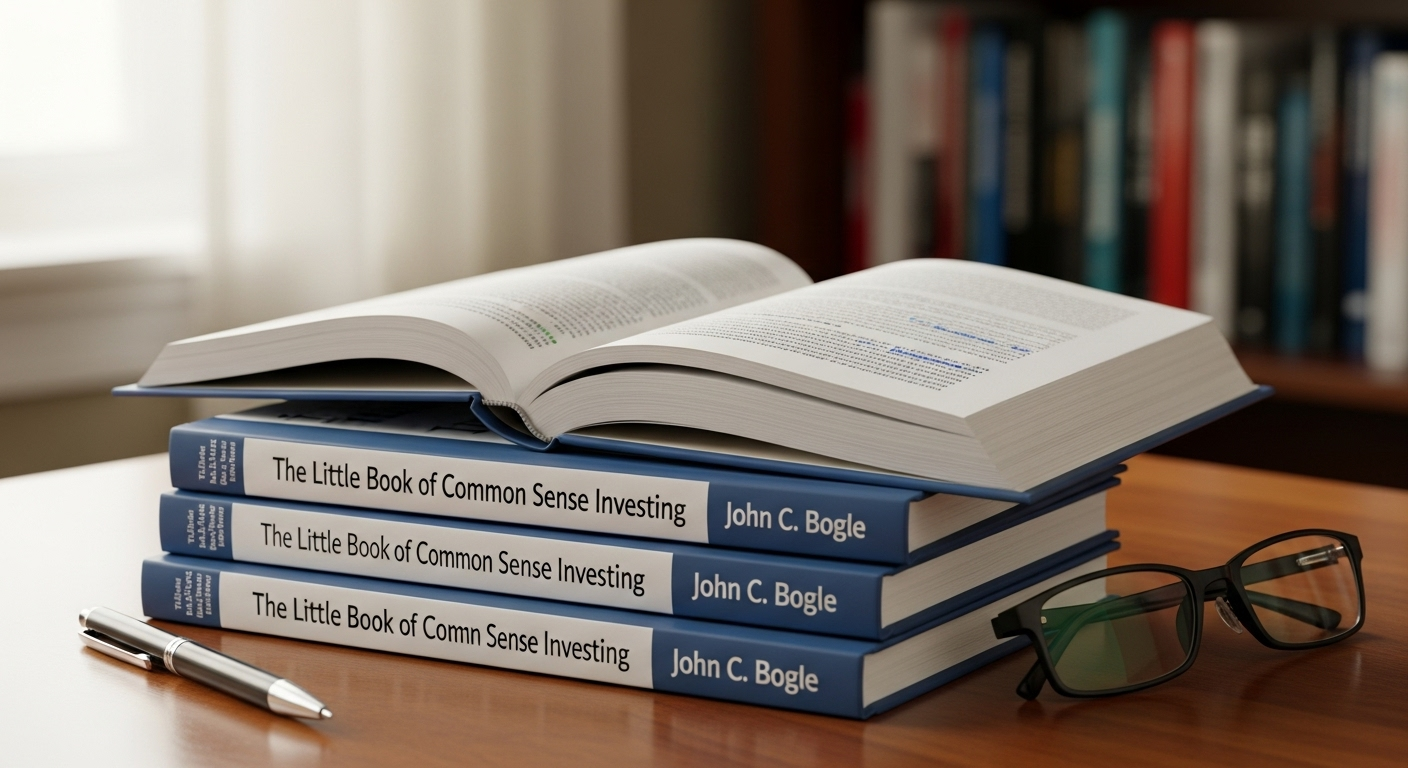
John Bogle was a legendary investor and founder of Vanguard Group, known as the “father of index funds.” He revolutionized investing by showing that ordinary people could grow wealth without expensive, complicated strategies. His book, The Little Book of Common Sense Investing, teaches readers how to invest wisely for the long term. The purpose of the book is to explain a simple, proven approach to building wealth: focus on low-cost index funds, avoid chasing market trends, and stay disciplined over time. Bogle’s core philosophy emphasizes simplicity, patience, and minimizing fees, proving that consistent, long-term investing is more powerful than trying to beat the market.
Lessons from John Bogle
Investing can seem complicated, but John Bogle, the founder of Vanguard Group, showed that building wealth doesn’t need to be confusing or expensive. His book, The Little Book of Common Sense Investing, focuses on a few simple, powerful lessons that anyone can follow. In this article, we explore three key lessons from John Bogle: investing in low-cost index funds, keeping investing simple, and harnessing the power of compounding through long-term investing.
Lesson 1: Invest in Low-Cost Index Funds
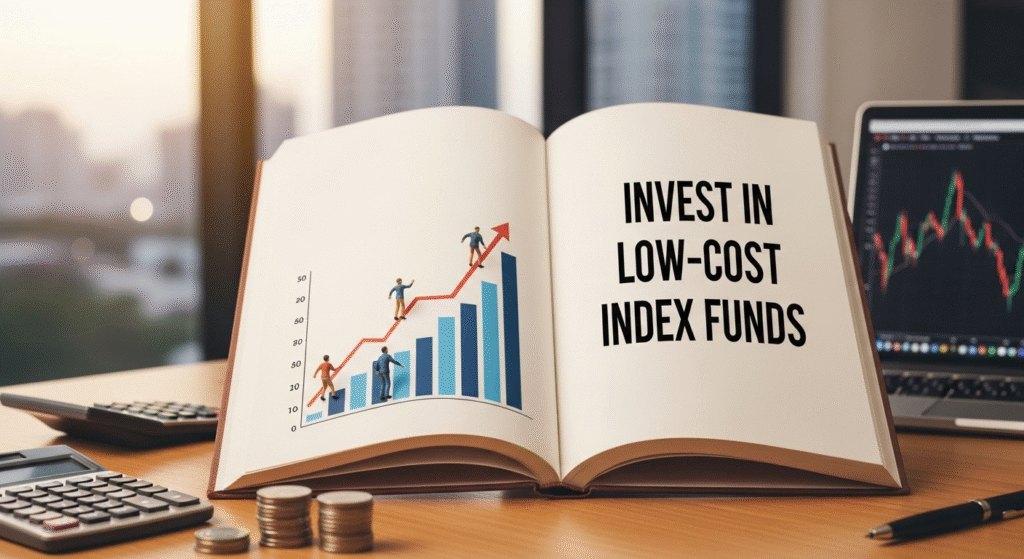
John Bogle is famous for creating the first index fund for individual investors. He believed that most actively managed funds, which try to beat the market, often fail after fees are considered. Bogle showed that index funds, which track the overall market, usually outperform expensive, actively managed funds in the long run. This is because they keep costs very low and avoid frequent trading, which eats into returns.
Low-cost index funds are simple and reliable. When you invest in an index fund, you own a small piece of many companies. This diversification spreads risk and reduces the chance of big losses. John Bogle emphasized that paying high fees to fund managers often reduces your investment growth. Even a small difference in fees can have a huge effect over decades.
For example, imagine two investors, each investing $10,000 at a 7% annual return. Investor A uses an index fund with a 0.1% annual fee, and Investor B uses an actively managed fund with a 1% annual fee. After 30 years, Investor A would have around $76,000, while Investor B would have only about $58,000. That $18,000 difference comes only from fees! John Bogle often used examples like this to show that minimizing costs is one of the easiest ways to improve long-term results.
Bogle’s advice is clear: focus on low-cost index funds, avoid chasing the latest investment trends, and let the market work for you. By doing this, you follow a proven path to long-term wealth.
Lesson 2: Keep Investing Simple and Avoid Complexity

Another major lesson from John Bogle is simplicity. Many investors make mistakes by chasing “hot” stocks or following market trends. Buying popular stocks can feel exciting, but it often leads to losses or poor returns. Bogle warned against trying to “beat the market” through complicated strategies or frequent trading.
Instead, John Bogle recommended a straightforward, rules-based approach. This means setting up a plan, investing regularly, and sticking to it, no matter what the market is doing. Simplicity reduces mistakes because you are not making emotional decisions during market ups and downs. When the market falls, many investors panic and sell, locking in losses. When it rises, they buy at high prices. Bogle showed that simple, disciplined investing avoids these traps.
By keeping things simple, you can focus on what matters most: consistent contributions, low costs, and diversification. A simple index fund strategy lets you benefit from the overall growth of the market without the stress of constantly monitoring investments. John Bogle believed that ordinary investors can achieve excellent results without fancy strategies or complex tools.
Simplicity also saves time. You do not need to spend hours researching individual stocks or funds. Instead, you can invest in a few well-chosen index funds and review them occasionally. This approach not only reduces stress but also increases the likelihood of long-term success.
Lesson 3: The Power of Compounding and Long-Term Investing
One of the most important lessons from John Bogle is the power of compounding. Compounding happens when your investments generate earnings, and then those earnings generate more earnings over time. Small, consistent investments can grow into large sums if you allow them to compound over many years.
John Bogle emphasized patience. Frequent trading or trying to time the market usually reduces returns because of fees, taxes, and poor timing. Instead, he encouraged investors to invest regularly and stay invested for the long term. Even small amounts, invested consistently, can grow significantly. For example, investing just $200 a month in a low-cost index fund earning 7% annually can grow to over $300,000 in 30 years. The key is to start early and stay disciplined.
Bogle also advised ignoring short-term market noise. Many investors react to daily or weekly market swings, but these fluctuations are mostly random and unpredictable. By focusing on long-term goals instead of short-term events, you avoid emotional decisions that can harm your portfolio. According to John Bogle, wealth grows steadily when you follow a plan, remain patient, and do not get distracted by temporary market trends.
Lesson 4: Minimize Fees and Investment Expenses
One of John Bogle’s most important lessons is that fees and expenses can silently erode investment returns. Every dollar you pay in fees is money that cannot compound and grow for you. Even seemingly small fees can have a major impact over decades.
How Fees Erode Investment Returns? Imagine investing $10,000 in a fund with a 7% annual return. If the fund charges 1% in fees, your effective return drops to 6%. Over 30 years, this difference is huge. A 7% return grows to roughly $76,000, while a 6% return only reaches around $57,000. That’s almost $20,000 lost to fees alone! John Bogle repeatedly warned that many investors fail not because of bad investment decisions, but because they pay too much in fees.
Understanding Expense Ratios and Hidden Costs: Expenses can take many forms. The most common is the expense ratio, which is a percentage of your assets taken annually by the fund to cover management costs. Actively managed funds usually have higher expense ratios than index funds. Other hidden costs include trading fees, account maintenance fees, and sometimes loads or commissions. John Bogle emphasized that understanding these costs is critical. Investors should always ask, “How much am I paying, and what am I getting in return?”
Practical Ways to Reduce Costs While Investing: John Bogle’s advice is simple: choose low-cost index funds, avoid frequent trading, and review your investments regularly to ensure fees remain minimal. Vanguard funds, for example, are designed to keep costs extremely low. You can also avoid financial products with high commissions or complex fee structures. Even a small reduction in costs can significantly improve your long-term returns. Minimizing fees is one of the easiest, most effective steps any investor can take.
Lesson 5: Stay Disciplined Through Market Volatility
Another critical lesson from John Bogle is the importance of staying disciplined during market ups and downs. Many investors make emotional decisions when markets fall or rise rapidly, often hurting their long-term performance.
How to Resist Panic Selling During Market Downturns? Market downturns are inevitable. Stocks and funds can drop 10%, 20%, or even more in a short period. John Bogle encouraged investors not to panic. Selling during a decline locks in losses and prevents your investments from recovering when the market rebounds. Instead, he recommended staying calm, reviewing your long-term plan, and maintaining your investment strategy.
Importance of Sticking to Your Plan: A disciplined approach means following your original investment plan, regardless of short-term market events. John Bogle believed that emotional reactions often lead to mistakes like buying high and selling low. A well-thought-out plan, focused on your long-term goals, protects you from impulsive decisions. Regularly contributing to your portfolio, even during downturns, can take advantage of lower prices and improve future growth.
Examples of Long-Term Market Recoveries: History shows that markets always recover over time. For instance, after the 2008 financial crisis, the stock market eventually rebounded and reached new highs. Investors who stayed disciplined and continued investing during the downturn benefited from the recovery. John Bogle often cited such examples to show that patience and persistence are more important than trying to time the market perfectly.
Lesson 6: Diversification is Key to Risk Management

Diversification is another cornerstone of John Bogle’s investment philosophy. Spreading investments across multiple asset classes reduces risk without sacrificing potential returns.
Spreading Investments Across Multiple Asset Classes: Diversification means investing in a variety of assets, such as stocks, bonds, and real estate funds. By holding different types of investments, you reduce the impact of a poor-performing asset on your overall portfolio. John Bogle recommended that investors balance growth and safety by combining equities with fixed-income assets according to their risk tolerance and goals.
Why Diversification Reduces Risk Without Hurting Returns: Many investors fear that diversification will lower their potential gains, but John Bogle explained that a well-diversified portfolio often produces steadier, more predictable returns. While individual investments may fluctuate wildly, a diversified portfolio smooths out the ups and downs. Over time, this approach reduces the risk of major losses while still capturing the growth of the market.
Using Simple Index Fund Portfolios to Achieve Balance: John Bogle promoted using simple index fund portfolios to achieve diversification. For example, a portfolio might include a total stock market index fund, a bond index fund, and a small international stock fund. This combination spreads risk while keeping management simple and costs low. By avoiding overly complex strategies, investors can enjoy the benefits of diversification without unnecessary stress.
Lesson 7: Avoid Emotional and Speculative Investing
Many investors make mistakes by letting emotions guide their decisions. Common errors include trying to time the market, chasing the latest trends, or overtrading. John Bogle warned that these strategies often lead to poor results. For example, selling during market downturns locks in losses, while buying hot stocks at their peak increases risk.
Emotions like fear and greed can cloud judgment. When the market drops, panic may push investors to sell. When prices rise, overconfidence can lead to risky decisions. John Bogle emphasized that successful investing is not about reacting to daily market movements but about trusting your plan and staying consistent. By following a clear, long-term strategy, investors avoid impulsive choices and let the market’s natural growth work in their favor.
Conclusion
John Bogle’s investing philosophy is simple, practical, and powerful. His lessons show that long-term wealth comes from low-cost investing, disciplined strategies, and focusing on what you can control. By using index funds, minimizing fees, staying calm during market ups and downs, and avoiding emotional or speculative decisions, investors can achieve consistent growth. Diversification, patience, and compounding further strengthen your portfolio over time. John Bogle proved that ordinary people do not need to chase trends or time the market to succeed. Following his guidance, anyone can build financial security and grow wealth steadily, simply by sticking to a clear, long-term plan.
FAQs
What is the main message of The Little Book of Common Sense Investing?
The main message is that long-term investing in low-cost index funds is the smartest way to grow wealth. John Bogle explains that fees, speculation, and emotional decisions often hurt investors. By keeping investing simple, staying disciplined, diversifying, and focusing on controllable factors, anyone can achieve steady growth. The book teaches practical strategies, emphasizing patience, consistency, and the power of compounding. Bogle’s advice helps ordinary investors avoid common mistakes and achieve financial security.
Why does John Bogle recommend index funds over actively managed funds?
John Bogle recommends index funds because they are low-cost, simple, and provide broad market exposure. Actively managed funds try to beat the market but often fail after fees and expenses. Index funds track the entire market, offering steady, predictable returns over time. Bogle showed that lower fees and consistent investing allow your money to grow faster. By investing in index funds, investors can avoid unnecessary risk, reduce costs, and benefit from the long-term growth of the stock market without the stress of picking individual stocks.
How do fees affect investment growth according to John Bogle?
Fees can significantly reduce investment growth over time. Even small annual fees lower the overall return because they reduce the amount that can compound. John Bogle emphasized that paying high fees to actively managed funds often prevents investors from reaching their financial goals. By using low-cost index funds, you keep more of your money invested. Minimizing fees is one of the easiest and most effective ways to improve long-term performance, allowing your portfolio to grow steadily without unnecessary expenses.