Who is Robert Kiyosaki?
Robert Kiyosaki is a famous entrepreneur, investor, and author, best known for his book Rich Dad Poor Dad. He was born in Hawaii in 1947 and started his career by exploring business and investing opportunities. Kiyosaki faced real financial challenges early in life, which helped him learn practical lessons about money.
He wrote Rich Dad Poor Dad to share these lessons and show the difference between traditional thinking about money and smart financial habits. His goal was to teach people how to manage money, invest wisely, and build wealth. Today, Robert Kiyosaki has influenced millions by promoting financial education, encouraging readers to think differently about money and long-term financial freedom.
Rich Dad vs Poor Dad Mindset
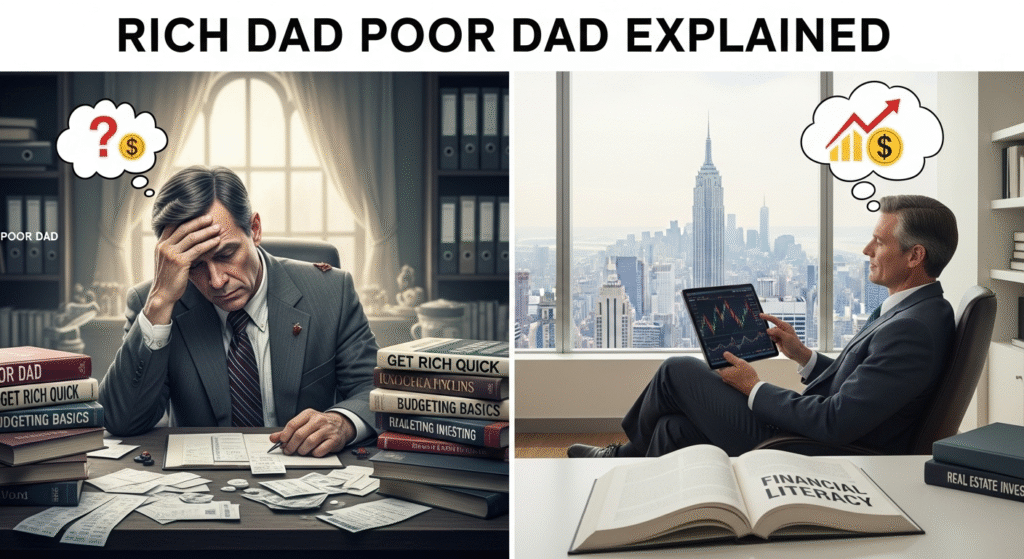
One of the most important lessons in Rich Dad Poor Dad is the difference between the mindset of a rich person and a poor person. Robert Kiyosaki explains that thinking about money affects how we earn, save, and invest. The “Poor Dad” mindset focuses on working for money, job security, and following conventional advice. This mindset often limits financial growth because it avoids risks and depends only on a paycheck.
The “Rich Dad” mindset, on the other hand, focuses on making money work for you. Rich Dad teaches the importance of learning about money, investing, and creating income streams that generate wealth over time. Rich people think in terms of opportunities, not just salaries. They focus on financial education, long-term planning, and disciplined habits.
By comparing these two mindsets, Kiyosaki teaches readers that financial decisions are heavily influenced by how we think about money. Poor thinking can lead to debt, limited growth, and financial stress. A rich mindset encourages saving, investing, and using money as a tool for freedom and security.
Lessons on money, work, and wealth include:
- Focus on building assets rather than just earning a salary.
- Understand how money grows through investments.
- Take calculated risks instead of avoiding opportunities.
- Think long term about financial independence.
Your mindset shapes every financial decision, from spending to investing. By adopting a rich mindset, you can develop habits that lead to wealth, while avoiding the common pitfalls of living paycheck to paycheck.
Understanding Assets and Liabilities

Another key lesson from Rich Dad Poor Dad is understanding the difference between assets and liabilities. Many people confuse the two, thinking anything valuable is an asset. Robert Kiyosaki emphasizes that assets are things that put money in your pocket, while liabilities take money out.
Examples of assets include rental properties, stocks, bonds, and businesses that generate passive income. Liabilities include personal loans, credit card debt, expensive cars, and other items that create ongoing expenses without generating income.
To build wealth, focus on acquiring income-generating assets. Start small by investing in savings accounts, mutual funds, or small rental properties. Over time, assets grow and create financial freedom. Avoid liabilities that drain your income, like unnecessary loans or high-interest debt.
The Importance of Financial Education

One of the biggest problems Kiyosaki highlights is that schools don’t teach money management. Most people learn about finances the hard way, through trial and error, mistakes, and debt. Without financial education, even high earners can struggle with money.
Financial education means understanding how to earn, save, invest, and manage money wisely. It includes learning about budgeting, taxes, investing, and risk management. Kiyosaki encourages readers to educate themselves, read books, attend seminars, and practice investing to improve financial literacy.
Steps to improve financial education include:
- Start learning early: Read beginner-friendly books on personal finance and investing.
- Track your income and expenses: Know where your money goes each month.
- Invest in assets: Start with small investments and gradually expand.
- Avoid debt traps: Learn the difference between good and bad debt.
- Seek mentors: Learn from successful investors or financial experts.
Financial education empowers you to make smarter decisions. It allows you to identify opportunities, manage risks, and plan for long-term financial freedom. Kiyosaki emphasizes that learning about money is just as important as working for it, and developing this knowledge early can have a lasting impact on your life.
Earning vs Working for Money

One of the most important lessons from Rich Dad Poor Dad is understanding the difference between earning a paycheck and making your money work for you. Robert Kiyosaki emphasizes that most people work for money, earning active income by trading their time for a salary. While a steady job provides security, it often limits financial growth because your income stops if you stop working.
Active income is money earned from working, such as a salary, wages, or freelance fees. This type of income requires continuous effort and time. On the other hand, passive income is money that comes to you with minimal ongoing effort. Examples include rental income, dividends from stocks, interest from savings, or profits from a business that runs without your direct involvement.
Kiyosaki encourages creating multiple streams of passive income. This approach reduces dependence on a single paycheck and builds long-term financial stability. By investing in assets like real estate, stocks, or small businesses, you can generate income that continues even if you are not actively working. He also stresses entrepreneurship as a way to create financial freedom. Starting a business allows you to leverage your skills, ideas, and money to build income streams that grow over time.
The Power of Investing
Investing is one of the most important lessons in Rich Dad Poor Dad. Kiyosaki teaches that money should work for you, not just the other way around. Using your money wisely through investments allows it to grow and create wealth over time. Investing is not just for the wealthy, it is a skill anyone can learn with education and discipline.
Real estate is one of the most common ways to invest. Buying rental properties or commercial real estate can generate monthly income while the property appreciates in value. Business investments are another avenue. By investing in a business or starting your own, you create an asset that can produce income, sometimes even without daily involvement.
Investing comes with risks, but Kiyosaki emphasizes that understanding and managing risk is key to success. Learning how to evaluate opportunities, calculate potential returns, and diversify investments can reduce risk while maximizing rewards. Opportunity often comes with uncertainty, and investors must learn to act despite fear. The rich focus on opportunities that generate income and build long-term wealth, rather than seeking short-term gains.
Overcoming Fear and Taking Risks
Fear is one of the biggest obstacles to financial growth. Many people avoid investing or entrepreneurship because they are afraid of losing money. According to Rich Dad Poor Dad, this fear keeps people trapped in jobs and financial dependency. Kiyosaki teaches that fear is natural, but it can be controlled with knowledge, planning, and discipline.
Managing financial risk is essential for building wealth. This does not mean avoiding risk entirely but understanding it. Successful investors analyze potential losses, prepare for challenges, and only take calculated risks. Kiyosaki advises learning from mistakes rather than fearing them. Every financial setback is an opportunity to gain experience and improve decision-making.
Calculated risk-taking is at the heart of entrepreneurship and investing. By stepping out of comfort zones and seizing opportunities, you can grow your assets and achieve financial freedom. Rich Dad teaches that those willing to learn, take risks, and act wisely often succeed where others remain stuck.
Money Mindset and Habits
Building wealth is not only about earning and investing, it’s also about developing the right money mindset and habits. Kiyosaki emphasizes that thinking like the rich is crucial. This includes seeing money as a tool, focusing on creating assets, and understanding the long-term effects of financial decisions.
Wealth-focused habits include tracking income and expenses, saving consistently, and investing regularly. Discipline is essential. Small, consistent actions over time can create compounding results that lead to financial independence. Rich Dad encourages long-term thinking, rather than seeking instant rewards or quick profits. Patience is critical in investing, entrepreneurship, and building passive income.
Kiyosaki also teaches lessons through lifestyle choices. The rich prioritize education, continuous learning, and financial awareness. They avoid consumer debt, minimize liabilities, and focus on acquiring assets. By adopting these habits, individuals can build a strong financial foundation, improve money management, and grow wealth over time.
A strong money mindset also includes overcoming scarcity thinking the idea that money is limited or hard to earn. Rich Dad teaches that money is abundant if approached strategically, and opportunities exist for those willing to learn, take risks, and act consistently.
Conclusion
Rich Dad Poor Dad by Robert Kiyosaki teaches valuable lessons about money, wealth, and financial freedom. The book shows the difference between working for money and making money work for you. By understanding assets versus liabilities, creating passive income, investing wisely, and developing a strong money mindset, anyone can improve their financial life. Kiyosaki emphasizes discipline, long-term thinking, and continuous learning as keys to success. Overcoming fear, taking calculated risks, and focusing on financial education help build wealth steadily. By applying these principles in daily life, readers can gain control over their finances, grow their wealth, and achieve lasting financial independence.
FAQs
Is Rich Dad Poor Dad suitable for beginners in finance?
Yes, Rich Dad Poor Dad is ideal for beginners. It explains money and wealth in simple, easy-to-understand language. The book focuses on basic financial concepts like assets, liabilities, and passive income. It also teaches practical habits to improve money management. Beginners can learn the importance of financial education, investing, and building multiple income streams. The lessons are presented as stories, making it simple to understand and apply in everyday life.
Can Rich Dad Poor Dad help with budgeting?
Yes, the book indirectly helps with budgeting. While it focuses on mindset and wealth building, understanding the difference between assets and liabilities encourages better spending choices. By prioritizing income-generating assets and avoiding unnecessary expenses, readers can manage money more effectively. Learning these principles can make budgeting easier because you focus on saving, investing, and controlling cash flow.
Does Robert Kiyosaki discuss debt in the book?
Yes, Kiyosaki talks about debt, especially the difference between good debt and bad debt. Good debt is used to acquire assets that generate income, like loans for a business or investment property. Bad debt includes high-interest loans for consumption or things that lose value. Understanding this distinction helps readers make smarter borrowing decisions. The book teaches how to use debt wisely to grow wealth instead of letting it become a financial burden.
What lessons does Robert Kiyosaki teach about money?
Robert Kiyosaki teaches that financial education is more important than earning a high salary. He emphasizes understanding assets versus liabilities, creating passive income, and making money work for you. Kiyosaki encourages disciplined spending, investing wisely, and overcoming fear when taking financial risks. His lessons also focus on long-term thinking, entrepreneurship, and building habits that lead to wealth.
Does Robert Kiyosaki support investing in real estate?
Yes, Robert Kiyosaki strongly supports real estate investing. He explains that owning property can generate passive income while increasing wealth over time. He encourages using real estate to build assets, create cash flow, and take advantage of opportunities in the market. Kiyosaki also teaches managing risk, understanding market trends, and using investments strategically rather than relying only on a paycheck.