Tax estimation tools help individuals and businesses calculate their taxes quickly and accurately. These tools simplify the complex process of tax planning by providing estimates based on income, deductions, and other financial details. Using tax estimation tools can save time, reduce errors, and help you prepare for tax payments in advance, avoiding last-minute stress and penalties.
In this guide, we will explore the top tax estimation tools available today. You will learn how these tools work, their key features, and how they can assist in planning your taxes efficiently. This guide makes tax calculation simple and clear for everyone.
Top Tax Estimation Tools for Individuals
Tax estimation tools have become essential for individuals who want to manage their taxes efficiently and accurately. With so many online calculators and software available, these tools make it easier to estimate tax liabilities, plan finances, and avoid unexpected payments at the end of the year. By using tax estimation tools, people can get a clear understanding of their taxable income, deductions, and potential refunds without needing to consult a professional accountant every time.
Popular Tax Estimation Tools for Personal Taxes
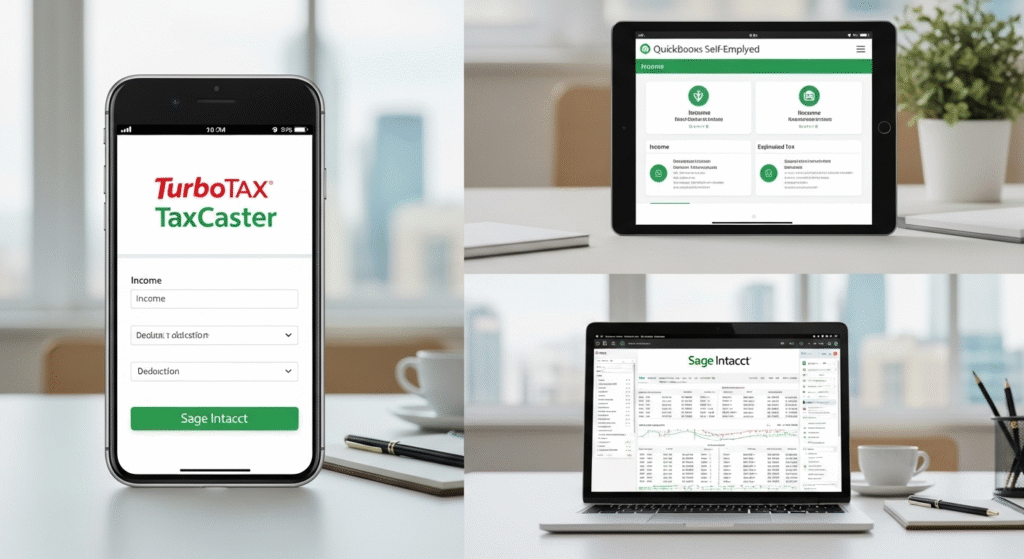
- TurboTax TaxCaster
TurboTax TaxCaster is one of the most widely used tax estimation tools for personal taxes. It allows users to estimate federal and state taxes by entering basic income, deductions, and credits. The interface is simple and user-friendly, providing an instant estimate of tax refunds or liabilities.
Features:
- Fast and easy tax calculations
- Real-time tax updates for the current year
- Mobile-friendly interface
Pros:
- Free to use
- Simple step-by-step guidance
- Accurate for straightforward tax situations
Cons:
- Limited features for complex tax situations
- Some advanced calculations may require TurboTax paid versions
Suitability: Best for salaried employees, freelancers with basic income, and people with standard deductions.
- H&R Block Tax Calculator
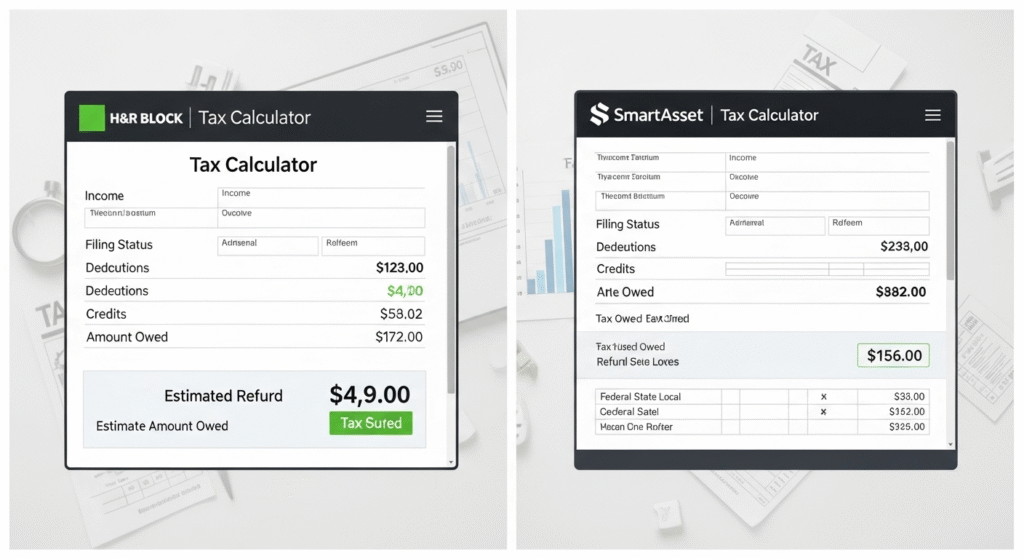
H&R Block offers another popular tax estimation tool that provides accurate tax estimates for individuals. It is especially helpful for those who want a reliable tool backed by a well-known tax service provider.
Features:
- Estimates federal and state taxes
- Provides information about deductions and credits
- Simple user interface
Pros:
- Free and easy to use
- Offers guidance on common deductions
- Trusted by a major tax preparation company
Cons:
- Limited for highly complex tax returns
- Some guidance may encourage users to purchase H&R Block services
Suitability: Ideal for individuals with standard income sources and moderate deductions.
- SmartAsset Tax Calculator
SmartAsset offers a user-friendly tax estimation tool that gives a quick estimate of federal, state, and local taxes. It provides an overview of taxes owed and suggests ways to reduce tax liabilities.
Features:
- Detailed estimate including federal, state, and local taxes
- Suggests potential deductions and credits
- Easy to navigate
Pros:
- Free and accurate
- Provides a holistic tax view including state-specific taxes
- Helps in planning savings
Cons:
- Not as detailed for complicated investments
- Limited guidance on filing process
Suitability: Best for mid-income earners, freelancers, and individuals with multiple income sources.
How Individuals Can Benefit?
Using tax estimation tools helps individuals plan for taxes throughout the year. People can estimate quarterly payments if needed, identify eligible deductions, and avoid last-minute surprises. For salaried employees, these tools simplify tax planning, while self-employed individuals can better track business income and expenses. Overall, tax estimation tools provide clarity, confidence, and financial control for personal tax planning.
Top Tax Estimation Tools for Businesses
Businesses, whether small companies, freelancers, or large corporations, face complex tax obligations. Tax estimation tools for businesses are designed to simplify these challenges by estimating tax liabilities, managing deductions, and ensuring compliance with regulations. They are essential for budgeting, planning, and avoiding penalties for late or inaccurate filings.
Tools Designed for Small Businesses and Freelancers
- QuickBooks Self-Employed
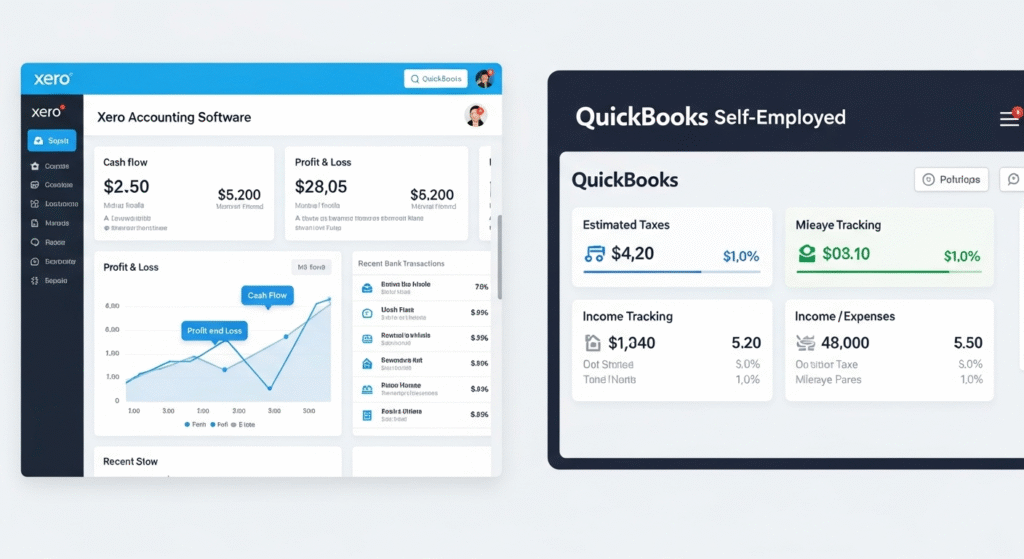
QuickBooks Self-Employed is a popular tax estimation tool for freelancers and small business owners. It tracks income, expenses, and tax obligations in real-time.
Features:
- Automatic expense tracking
- Quarterly tax estimation
- Integration with bank accounts and invoices
Pros:
- Reduces manual calculations
- Provides clear tax summaries
- Mobile app for on-the-go tracking
Cons:
- Subscription-based service
- May not cover complex corporate tax requirements
Suitability: Ideal for freelancers, sole proprietors, and small businesses with simple finances.
- Xero Accounting Software
Xero is another tax estimation tool tailored for small and medium businesses. It integrates accounting and tax functions, making it easier to monitor tax liabilities.
Features:
- Automatic tax calculations
- Invoicing and expense management
- Reports for budgeting and compliance
Pros:
- Cloud-based and accessible anywhere
- Helps with financial planning and forecasts
- Provides audit-ready reports
Cons:
- Monthly subscription cost
- Learning curve for beginners
Suitability: Best for small businesses and startups seeking comprehensive financial and tax management.
- Gusto Payroll & Tax Tools
Gusto is a payroll-focused tax estimation tool that simplifies employer tax obligations, including payroll taxes, unemployment insurance, and filing deadlines.
Features:
- Automated payroll tax calculations
- Employee tax forms and filings
- Compliance alerts and reminders
Pros:
- Reduces risk of errors in payroll taxes
- Saves time and administrative effort
- Easy to use for small teams
Cons:
- Costs can be high for larger teams
- Limited use for broader business tax planning
Suitability: Ideal for small businesses with employees, startups, and growing companies.
Tools for Corporations
- Sage Intacct
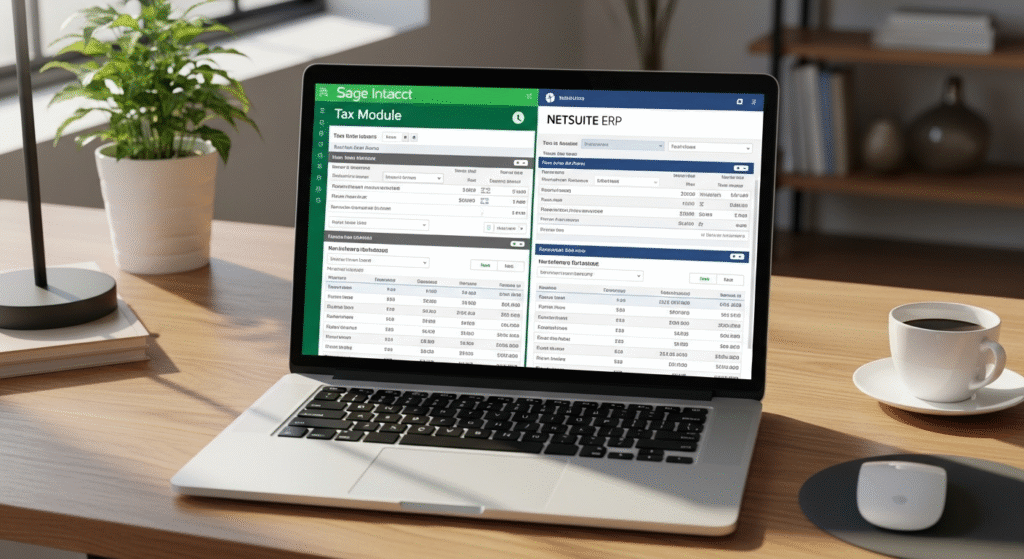
Sage Intacct is an enterprise-level tax estimation tool that helps corporations manage complex financial operations, including multi-state and international taxes.
Features:
- Advanced reporting and analytics
- Tax compliance for multiple jurisdictions
- Integration with ERP systems
Pros:
- Suitable for large-scale operations
- Accurate tax projections
- Supports complex corporate structures
Cons:
- Expensive and requires training
- Overkill for small businesses
Suitability: Large corporations with complex financial and tax needs.
- NetSuite ERP Tax Module
NetSuite’s ERP platform includes a tax estimation tool that helps businesses automate tax calculations and reporting.
Features:
- Real-time tax estimates
- Multi-country tax compliance
- Financial dashboards for tax planning
Pros:
- Streamlines corporate tax management
- Reduces errors and manual work
- Supports international operations
Cons:
- High cost
- Requires IT expertise for setup
Suitability: Global companies, multinational corporations, and enterprises needing integrated financial solutions.
Benefits for Businesses
Using tax estimation tools allows businesses to plan ahead, manage cash flow, and avoid penalties. These tools simplify accounting, reduce errors, and provide real-time insights into tax obligations. For freelancers and small businesses, they help track income and deductible expenses. For corporations, they ensure compliance with local and international regulations. Overall, tax estimation tools save time, enhance accuracy, and support financial decision-making, making them indispensable for modern business operations.
Online vs Software-Based Tax Estimation Tools
Tax estimation tools are available in two main formats: online calculators and downloadable software. Each type has its own advantages and disadvantages, making it important to choose the right tool based on individual needs and financial complexity.
Advantages and Disadvantages of Online Calculators
Online tax calculators are web-based tools that allow users to estimate taxes directly from a browser. They are convenient, easy to access, and often free. One major advantage of online tax estimation tools is that they do not require installation, so users can quickly input income, deductions, and other details to get instant results. These tools are also updated regularly to reflect the latest tax rates and regulations.
However, online calculators have some disadvantages. They may have limited features for complex tax situations, such as business income, investments, or multiple deductions. Since calculations are performed on the web, users need a stable internet connection, and sensitive financial data is stored online, which could pose security concerns. Despite this, online tax estimation tools are ideal for simple tax calculations and quick estimates.
Advantages and Disadvantages of Downloadable Software
Downloadable software-based tax estimation tools are installed on a computer or device. These tools often provide more advanced features, including detailed reporting, multiple tax scenarios, and integration with other financial software. They are suitable for individuals with complex income, small business owners, or investors. Software tools can also function offline, reducing the risk of internet-related interruptions.
The disadvantages include the cost of purchasing software and the need for regular updates to keep calculations accurate. Additionally, some software may require more time to learn, especially for first-time users. Despite these challenges, software-based tax estimation tools are more comprehensive and better suited for those who need detailed tax planning and advanced features.
Key Features to Look for in Tax Estimation Tools
When selecting tax estimation tools, it is important to consider several features to ensure accuracy and ease of use.
Accuracy and Reliability: The tool should calculate taxes correctly based on the latest federal, state, and local tax rules. Reliable tax estimation tools reduce the risk of errors and help avoid penalties.
User-Friendly Interface and Accessibility: A simple, easy-to-navigate interface ensures users can quickly input data and understand results. Mobile-friendly tools add convenience, allowing users to estimate taxes on the go.
Integration with Accounting Software or Tax Filings: Some tax estimation tools integrate with accounting platforms or directly with tax filing software. This saves time, reduces manual entry, and helps track deductions and payments accurately.
Security and Privacy of Financial Data: Since tax tools handle sensitive information, strong security features are crucial. Look for tools with encrypted connections, data privacy policies, and secure storage to protect personal and financial data.
Conclusion
Using tax estimation tools makes managing taxes easier, faster, and more accurate for both individuals and businesses. These tools simplify complex calculations, help track deductions, and provide estimates of tax liabilities, reducing the risk of errors or late payments. Whether you choose online calculators for convenience or software-based tools for advanced features, these tools improve planning and financial decision-making. By selecting tools with accurate calculations, user-friendly interfaces, and strong security, users can confidently estimate taxes, save time, and stay organized.
FAQs
Can tax estimation tools replace a professional accountant?
While tax estimation tools are helpful, they cannot fully replace a professional accountant. Tools provide estimates and basic guidance, but complex situations like business taxes, investments, or international income may need expert advice. Accountants can ensure compliance, optimize deductions, and provide personalized recommendations. Using tax estimation tools alongside professional advice allows users to save time while still benefiting from expert insights. They complement each other rather than completely replace human expertise.
Can freelancers benefit from tax estimation tools?
Yes, freelancers can greatly benefit from tax estimation tools. Freelancers often have variable income and multiple expenses, making tax planning complicated. These tools calculate estimated taxes, track deductible expenses, and suggest quarterly payment amounts. Using tax estimation tools helps freelancers avoid penalties, save for taxes, and maintain accurate financial records. They simplify tax planning and provide confidence that all income and deductions are accounted for correctly.
Do tax estimation tools work for both federal and state taxes?
Yes, many tax estimation tools calculate both federal and state taxes. Users can input their income, deductions, and credits to get estimates for each level of taxation. This is especially helpful for individuals living in states with specific tax rules. By including state taxes in the calculation, tax estimation tools provide a complete picture of total tax liability, ensuring accurate planning and helping users avoid underpayment or penalties.